Here’s What the Prosecution Is Looking For
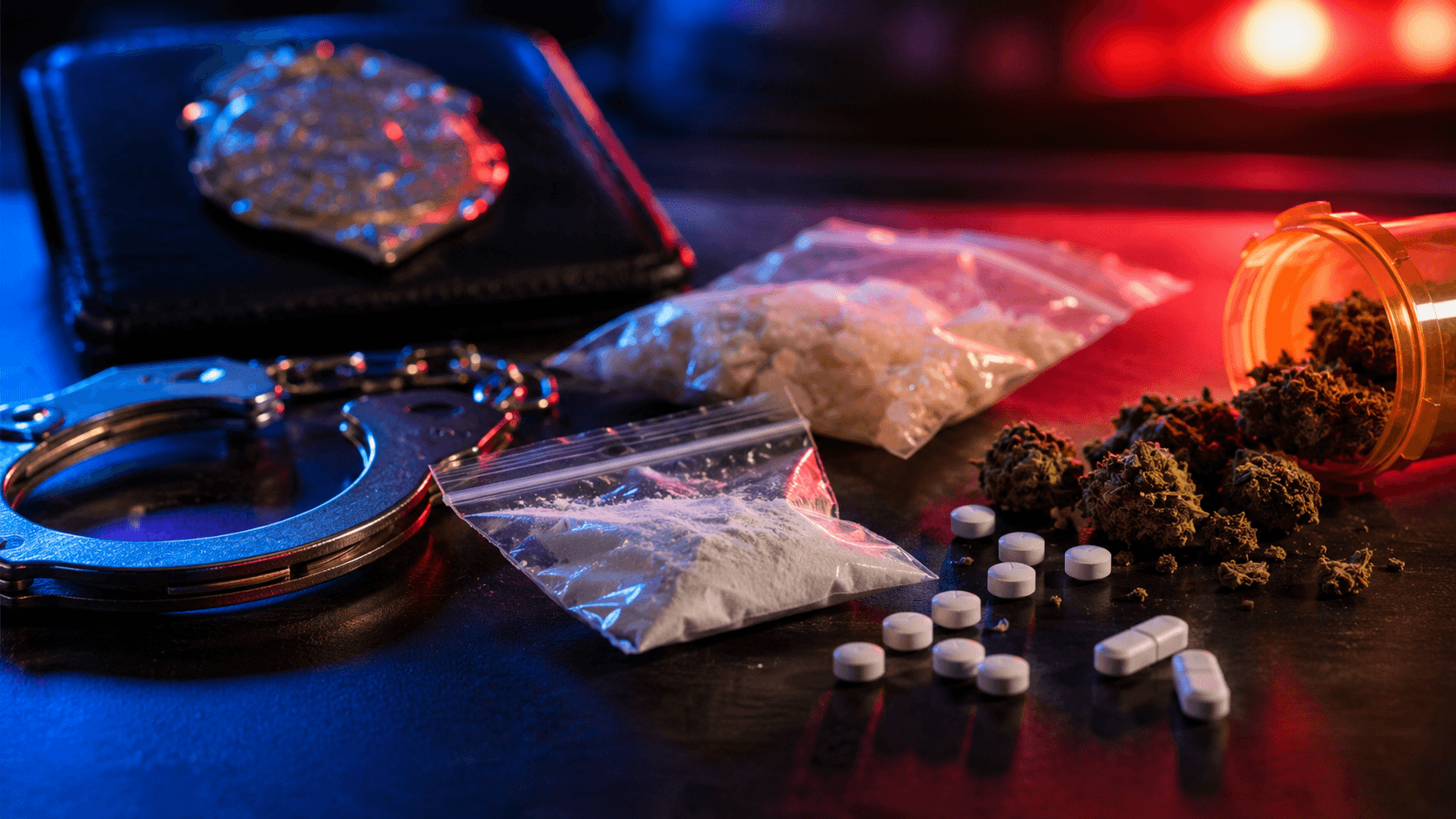
A drug charge in Pennsylvania can range from a minor possession case to a serious felony. What determines how hard the prosecution comes at you — what charges they file, what offer they put on the table — has everything to do with how they’re building the case behind the scenes.
Most defendants never see that side of the process. We spent years on it.
Understanding how prosecutors evaluate drug cases directly shapes how a defense attorney approaches yours — what motions get filed, what arguments get made, and where real leverage exists in negotiations. Here’s an honest look at what the Commonwealth focuses on when building a drug case, and what that means for you.
How Drug Charges Are Classified in Pennsylvania
Pennsylvania follows the federal schedule system for classifying controlled substances. Schedule I drugs — heroin, certain synthetic opioids — carry the most serious penalties. Schedule II covers cocaine, methamphetamine, and prescription opioids. The schedule of the drug is one of the first things a prosecutor looks at.
Beyond the drug itself, Pennsylvania law draws a sharp line between two charges:
- Simple possession — you had a controlled substance for personal use
- Possession with intent to deliver (PWID) — the prosecution believes you had the drugs to sell or distribute, even if no transaction ever took place
That distinction matters enormously. PWID is a felony. It carries significantly higher penalties and is prosecuted much more aggressively. And the line between the two is often less clear than people expect.
Where Medical Marijuana Fits Into Pennsylvania Drug Law
Pennsylvania legalized medical marijuana in 2016, and more than 440,000 patients are now registered with the state program. Many of them assume a card puts them safely outside drug law. It does not.
A card protects you only when you follow the program exactly. Step outside those lines and you are back in the same controlled substance framework as any other drug case. This was one of the most common misunderstandings we saw from the prosecution side.
What a Medical Marijuana Card Does and Doesn’t Cover
If you are a registered patient, the law protects you when you possess and use cannabis the way the program requires:
- A valid card tied to a qualifying condition certified by an approved physician
- Marijuana purchased only from a state-licensed dispensary
- Quantities that stay within your certified supply limit
- A permitted form of use (vaporizing flower is allowed, smoking is not)
Cross any of those lines and the protection disappears. Growing your own plants is illegal in Pennsylvania, even for patients. So is sharing your supply, going over your limit, or buying from anyone other than a licensed dispensary. Possession with no card at all is still a criminal offense, and Pennsylvania has no recreational exception as of 2026.
The DUI Trap Most Patients Never See Coming
This is where patients get blindsided. For DUI purposes, Pennsylvania still treats marijuana as a Schedule I controlled substance, even for registered patients. Under the state’s zero-tolerance standard, any detectable amount of THC in your blood can support a DUI charge, with no requirement that you were actually impaired.
THC can linger in your system for days or even weeks after use. A patient can take their medicine on a Friday, drive completely sober the next week, and still test positive. The card is not a defense. Telling an officer you are a patient can invite more scrutiny, not less.
Reform has been proposed. Bills with bipartisan support would require proof of real impairment before a patient could be convicted. As of 2026, none have become law, and the zero-tolerance rule still controls. Anyone who uses medical marijuana and gets behind the wheel in Pennsylvania needs to understand that exposure clearly.
This is exactly the kind of gap between what feels legal and what the statute actually says that we know how to attack. The defense usually lives in the details: whether the stop was justified, whether the blood draw was lawful, and whether the Commonwealth can connect a test result to anything beyond the mere presence of THC.
What Prosecutors Look for to Prove Intent to Deliver
When deciding between simple possession and PWID, prosecutors look at the totality of the circumstances. No single factor is usually decisive — but several together build the argument they need. This is exactly how we used to think about these cases.
The factors prosecutors rely on most:
- Quantity — larger amounts suggest distribution over personal use
- Packaging — multiple individually wrapped portions strongly suggest sales
- Distribution paraphernalia — scales, baggies, and similar items
- Large amounts of cash, especially small bills
- Text messages or call logs suggesting drug transactions
- Witness statements or confidential informant information
- Location — proximity to schools or parks triggers enhanced penalties
- Prior drug convictions, used to argue a pattern of dealing
None of these are conclusive on their own. Someone can have a large quantity for personal use. Cash isn’t illegal. A scale has plenty of legal uses. A defense attorney who knows how prosecutors build these arguments can challenge each piece — and force them to defend every assumption they’re making.
The Role of Confidential Informants
A significant number of drug cases — especially PWID and trafficking charges — are built at least in part on confidential informant information. These are individuals who provided information to law enforcement, often in exchange for leniency in their own cases.
Prosecutors rely on them heavily. Defense attorneys scrutinize them just as hard.
The credibility of an informant is always fair game for challenge — their history of reliable information, any deals they received, their own criminal record, and whether their account holds up against independent evidence. We’ve seen cases where the prosecution’s entire theory rested on a single informant whose credibility fell apart under examination. When that happens, so does the case.
If an informant was involved in your arrest, that’s one of the first things your attorney should be digging into. The prosecution doesn’t have to immediately identify them, but there are legal mechanisms to challenge their use — and in the right circumstances, to compel disclosure.
How Prosecutors Decide Whether to Take a Case to Trial
Not every drug case goes to trial — prosecutors know that as well as defense attorneys do. When a DA’s office evaluates a case, they’re thinking about the strength of the evidence, the credibility of their witnesses, whether the search was legally sound, and what a jury is likely to do with the facts in front of them.
The legality of the search is one of the most critical issues in any drug case. If law enforcement obtained the drugs through an illegal stop, an improper search, or without a valid warrant where one was required, a motion to suppress can get that evidence thrown out entirely. No drugs in evidence usually means no case.
Prosecutors also weigh how a defendant will play with a jury — prior criminal history, the nature of the charge, the circumstances of the arrest. A defense attorney who understands calculus can use it in negotiations to push for a better resolution without ever stepping into a courtroom.
Pennsylvania’s Treatment Options and Diversion Programs
Pennsylvania has moved toward treating addiction as a public health issue, and that shift has created real options for certain defendants. Drug Treatment Court, ARD for qualifying first-time offenders, and other diversion programs can offer a path that avoids a conviction entirely — or significantly reduces the consequences of one.
Eligibility depends on the nature of the charge, your prior record, and the county where your case is being prosecuted. York County has its own programs and its own standards. Navigating them requires an attorney who knows the local system and has the relationships to advocate effectively for your participation.
Not every defendant qualifies. But for the right person in the right circumstances, diversion can be the difference between a conviction that follows you for life and a resolution that lets you move forward. It’s always worth exploring before assuming the only options are a plea or a trial.
Frequently Asked Questions
These are the drug charge questions Pennsylvanians search for most. Here are straight answers.
Charged With a Drug Offense? Let’s Talk.
Drug cases in Pennsylvania move fast, and the decisions made early have a lasting impact on where things end up. Whether you’re facing a first-time possession charge or a serious PWID case, having an attorney who understands how the prosecution thinks — because they used to be the prosecution — gives you a real advantage from the start.
Kearney Law handles drug offense cases throughout York, Adams, Lancaster, Cumberland, Dauphin, and surrounding counties, as well as federal courts across Pennsylvania. We know how these cases are built, where they’re weak, and how to fight them.
Your first consultation is free. Call us at 717-668-8159. Don’t wait on this one.