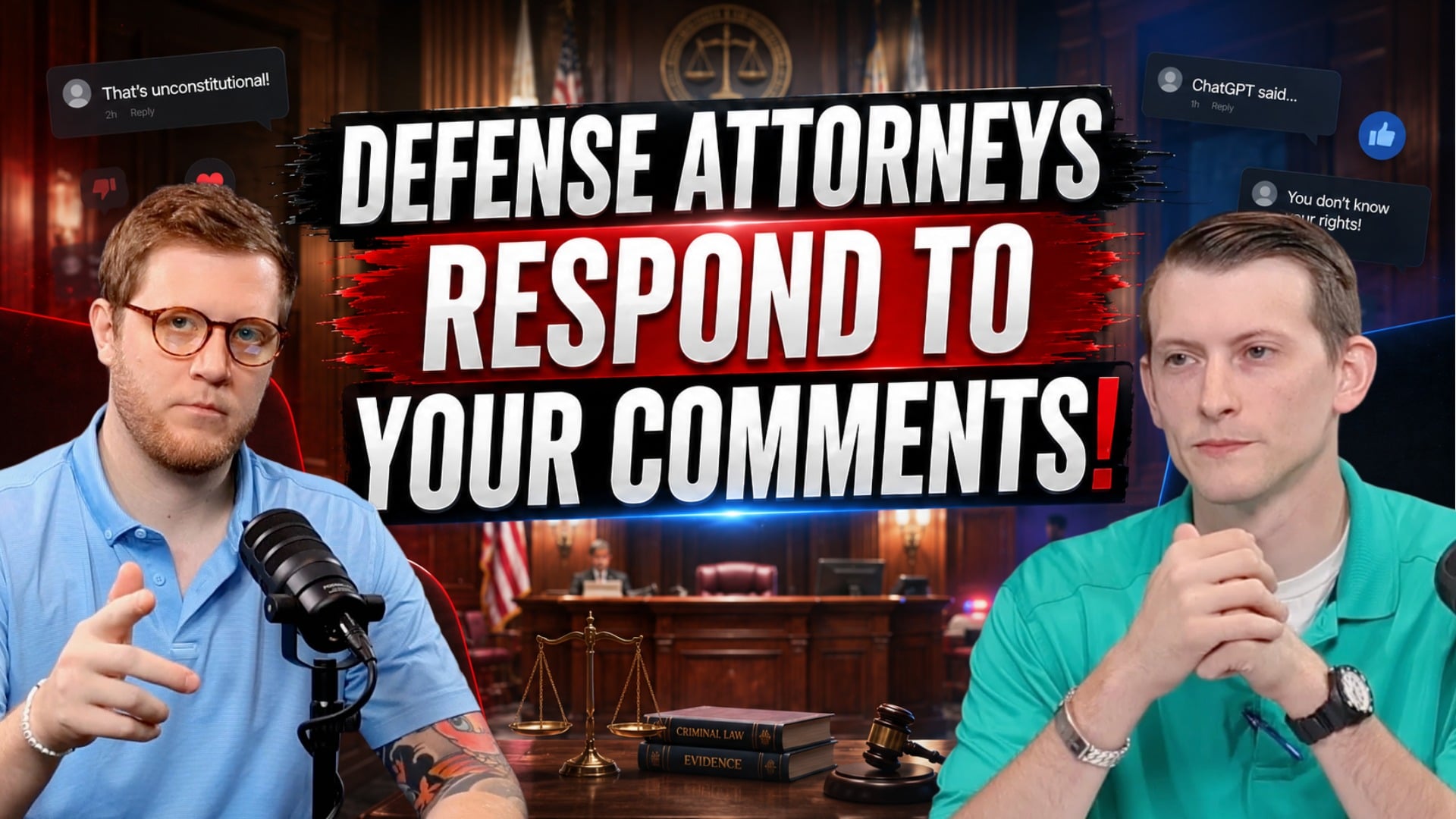
As you will no doubt have noticed, I am not t.l. I am Tim sitting in Tl’s chair. TL is not here this week. And so the inmates are truly running the asylum here as we do the podcast this week. How’s it going, man? What’s up? And also shout out to L. Today’s his birthday. Oh yeah. Happy birthday to you. Yeah. Um, but yeah, guys, we hope that, uh, you’re going to enjoy our podcast this week. It’s going to be shorter probably than most of ours have been so far. Um, we’re going to try to do something a little fun. Um, so I’ll let Tim take it away. Yeah. So, uh, this week we thought since we’ve been doing this now for a few months, we’ve had quite a few comments build up on some of the social media sites like Instagram and TikTok especially, and we figured it would be a good time maybe to do like a more informal episode where we just respond to some of these comments, and we’re going to highlight some of the comments. And some of them are we’re highlighting because they’re a little bit on the ridiculous side. Some of them were highlighting because they are good comments, and we wanted to, to highlight them and respond to them and talk about them a little bit. As a disclaimer, first thing, we don’t say this enough, but we probably should start saying it more. Nothing that we’re saying in this podcast is meant to be legal advice specifically for you in whatever situation you’re dealing with. If you want specific legal advice, contact an attorney. We’ve said that before. Um, so we are in no way singling anyone out to, uh, to chime in on whatever situations they’re dealing with. Uh, we’re also not doing this to be mean spirited. Uh, we may have a little bit of a laugh and a joke at a little bit at some of the, the expense of some of these comments. But we’re not trying to be mean spirited or make people feel stupid for, for commenting on videos. That’s not the intent of today’s episode. Um, really, this is a good chance for us to show how people think kind of the average person thinks, and then how attorneys think because there is a difference and you’re going to see some of these people are clearly not attorneys. And that’s why we do this podcast to, to try to inform. So we’ll just jump right into it here. Uh, the first comment that, that we’ll highlight here comes from the DUI episode one of the very early episodes that we did. And the comment says, the Constitution says I have the right not to give evidence against myself. That’s true. Giving blood in a DUI is giving evidence against yourself. Now, this is where the comment kind of took a turn. Sure, Sue everybody involved who tells you not to refuse giving blood? Um, that’s problematic on several levels. The first is that we talked about this in the episode itself. And obviously we don’t fault anyone for watching the shorts and not watching the whole two hour long episode. But we did talk about implied consent laws and how those have been routinely upheld in courts. And while they cannot charge you with additional criminal penalties just off of the refusal alone unless you refuse a warrant, they are allowed to suspend your license through PennDOT. It’s an administrative penalty for refusing the blood draw. And back to the second point, which was giving blood is, is giving evidence against yourself. We talked about this too. It is actually not Fifth Amendment protected material giving blood is not protected by the Fifth Amendment. It is what they call non testimonial evidence. The Fifth Amendment protects you from being called as a witness against yourself, having to testify against yourself. So you cannot be compelled to give testimonial evidence against yourself. But you can be compelled to submit handwriting exemplars, voice samples, business records, some of those kinds of things with the appropriate legal steps, like a warrant or a subpoena or something like that. You can be compelled to turn these things over. And blood is no exception. There it is. Non testimonial evidence. Um, any thoughts on that Justin. Yeah. I mean in my experience doing DUI defense, the amount of people who just automatically assume giving blood is, you know, they don’t have to do it. Why should I have to do it? Uh. This is wrong. My rights are being. My rights are being violated. Uh, like you said, it’s an administrative penalty. It’s a civil penalty. So that alone takes essentially your refusal to give blood out of a lot of the protections that you’re guaranteed under the, you know, right to self-incrimination, etc.. Um, and I think people just really don’t understand that. Right. So I think it’s a big deal for people to understand that again, implied consent. If you’re driving on the road in Pennsylvania or you have a Pennsylvania driver’s license, it is implied that when the officer asks you to submit to a chemical test of your blood, if they believe you’re DUI, that you will do so. And if not, you face those civil penalties. Yeah. And it used to be, uh, the form that they read that gives you these warnings. It was it’s we call it the DL twenty six. Yes. And that is the PennDOT form. It’s a standard form that the police officers have to read to you verbatim, and it advises you of your rights and the penalties for refusing the blood draw. It used to be that there was a block on there for people to sign. Yes. And if they refused, or if they refused to sign it, it counted as a refusal. Now, though, the PennDOT form has been changed. Yeah. That came up in a case, I think it was right before we left the DA’s office. Oh, yeah. I was talking with somebody. I can’t remember who it was. It was either an officer or defense attorney about that form. And like you said, there used to be a spot where they would have the operator’s signature, and then all of a sudden it wasn’t there. And I was like, this. This form kind of looks a little bit weird. And I didn’t know if it was an old form, a new form, whatever. Um, and what I was told is that the new form, they had just revised it to essentially take that part out because people were challenging that in court. Um, you know, if they were signing it or not signing it. Um, and they were saying, you know, this is basically me giving evidence against myself. Yeah. So the, the form was changed, I think, in part to kind of forestall some of that. And also now I think it’s a little bit more complicated. Like I have a case where for some reason, PennDOT thought it was a refusal, even though there was a it was consent and they did a blood draw. So there are definitely complications that come now out of the new form as well. Um, but again, kind of going back to the comment, non testimonial evidence, you can and you should as we talked about submit to the blood draw. In many cases there are some cases where maybe it makes sense not to do that. Um, but primarily for the average person looking at their first DUI, you’re making it harder on yourself. You’re triggering, you’re triggering an automatic suspension for twelve months. If you refuse that blood draw. And even that’s even if you get a r d in the end, I think it is still a twelve month suspension for refusal. Yeah. Refusal separate from the conviction. Right. Um, so next comment also on the subject of DUI and this one came from the short where we addressed the idea of getting a DUI for prescription medication, and specifically in the context of medical marijuana. And the comment actually comes to us from someone who appears to not live in the US or maybe didn’t live in the US for some time. Um, and the comment reads, they warn us about this in driving school in Europe, to be honest. So it’s not surprising to us. But shake my head. America doesn’t know how to teach their traffic rules properly. Um, preaching to the choir there, I think a little bit. Uh, I think our driver’s education definitely leaves a little bit to be desired. I don’t even know if they require people to go through driver’s ed anymore in school. It used to when I was in high school, we had to do it. I, I know that we had it. I didn’t do it. Um, maybe in like, I want to say like health class, you know what I mean? Like, or like, whatever they call it the, uh, um, what is it when they like life skills almost, right. Yeah. Um, I know I didn’t do driver’s ed. I started driving before I was sixteen on on some backroads. I lived out in the country and my dad would take me. That’s how I learned to drive a stick shift. Um, but by the time I came around to be, you know, sixteen and able to get my permit, I just remember going to the DMV when I turned sixteen. I got my permit. You take a written test. That’s pretty much it. Take a written test, and then, uh, you go to, what is it, six months? I think you had to have it at the time. I don’t know if it’s still that way, I think. Yeah, it’s a combination and it’s been a while, obviously, but I think you have to have it for a minimum of six months. And you also have to have a certain hour requirement, I think. Oh, really? I think you have to have a certain amount of hours behind the wheel like of experience before you. I mean, that’s, that’s probably better than what it was. Because I know I think that’s how it was when I got my license, but I could be wrong. I don’t remember the hours portion, but I do remember going to take my test and the where I took it, there was a stop sign that was back from the intersection a little bit, and I basically rolled up to the stop sign and I couldn’t see in the intersection. So I just pulled forward a little bit and then stopped and the guy was like, I should fail you. But yeah, you’re supposed to stop at the stop sign, but you’re doing okay. Yeah. Um, I think the biggest thing that gets people is parallel parking. But as far as the actual permit test, I mean, you get a book, it’s like fifty pages. You read through it once and you can pass the test. It’s fairly, fairly simple. Yeah. And then and there’s no like retesting requirement either, which means that a lot of those, that knowledge and skills, uh, deteriorates over time because people just don’t if you’re, you’re not keeping up with it. A lot of people do, I think, forget a lot of the rules of the road. Absolutely. So yeah, and I think specific to that comment with the medical marijuana thing, people just assume if they have a medical marijuana card, you know, you can use marijuana. Obviously it’s technically legal if, if, if you have the card, but they never inform you when you get that card or when you get your license. As far as I’m aware, that having medical marijuana in your blood is the same as having marijuana. I mean, there’s really no difference between medical marijuana and marijuana off the street other than, uh, someone’s buying it legally. Uh, so the fact that, you know, you have that in your blood, and if you’re a heavy smoker or heavy user, again, we’ll talk about this, I’m sure in one of the comments versus how you should ingest it legally. Um, yeah. At any point, if you’re a heavy user, you’re going to be DUI because the metabolites just stay in your blood for, for such a long period of time. And I think another thing that kind of complicates that, that did complicate this for a lot of people is that by the time the Medical Marijuana Act passed, a lot of people had their licenses already. So a lot of people got the card after they got their license. And so they were never really advised or instructed on the interaction between medical marijuana and the license requirements and the rules of the road. So, uh, the, I think the point of the comment is well taken. Uh, that, that and I would hope obviously, I don’t know, but I would hope that they are trying to educate people a little more, knowing that now that we’ve had the Medical Marijuana Act for quite some time, that there are people who probably get their medical card before they ever get a license. And that means that they do need to kind of be aware of some things that otherwise you didn’t have to know when you initially got your license before the Medical marijuana act. So, um, there is, I think to the point of the comment, there is a little bit of an education gap when it comes to driving, which we could talk. Yeah. Talk about in a broader context with driving habits on the road. I think there’s, there’s some studies and some claims out there that, that the quality of driver on the road is not so great anymore compared to what it historically was. Um, so yeah, I, I definitely think the comment is, is insightful. And one thing just to add to that is as well, the people don’t know, but we know we go and speak at some of the DUI education classes here in York County. And a lot of the people that we see in those classes. We’re informing them of this even though they already have their DUI. Right. But they still didn’t know this or they they think they knew something and they argue with us a little bit. Um, but again, that’s why, you know, talk to a lawyer, contact an attorney. If, if you’re, you’re facing some type of charge, especially a DUI. Um, but I do think that a lot of people become informed of this information regarding, you know, medical marijuana, having that card and the effects on your driver’s license or the effects it could have on your driver’s license. And they don’t get that until it’s too late, right? Yeah. So in one sense, I mean, they’re kind of finding out the hard way. Yeah. Um, yeah. So, um, definitely, like I said, I think one of the, one of the good comments here that, that we’re looking at, um, the next comment kind of in the same context, talking about medical marijuana and DUIs. And this one was a short, I think, where TL was talking about how you can get DUIs for prescriptions and you can get DUIs for the presence of an inactive metabolite. Under the current law in Pennsylvania, having the inactive metabolite of marijuana in your system is a per se DUI offense. There’s a pretty big push, and there has been, I think, for some time to eliminate that. And we’ve talked about this and I know I’ve told you, um, you know, that I there was a time where I wasn’t, I was thinking the law probably should change, but it marijuana being a new newly legalized in so many places, it is important for them to do studies on this. Medical studies, scientific studies to determine the effects of further legislation on, you know, the facts and as it relates to to marijuana consumption and driving and that kind of stuff. And I, I had, I had said that, that there really wasn’t much, uh, literature out there on whether or not the inactive metabolite had, uh, sort of like, like impairing effect. But I do think that that that it is starting to look like there aren’t impairing effects from the inactivity. It’s not psychoactive. So it’s a non-psychoactive component. So yeah. Um, and that I think we’ve, we did talk about this in the episode that there are some officers out there, I’ve interacted with them that know somebody based on what they’re saying. They smoked maybe within the last month, they probably technically have the DUI because of the inactive metabolite being in their system. But I’ve known many officers who they’re not seeing the signs of impairment on the roadside. So they are not proceeding with a DUI investigation or DUI charges because they I think a lot of officers kind of know intuitively that it’s a little bit unfair, maybe the way that it’s currently set up in the law and that it is something that could potentially change in the future. And so the comment here asks in response to the video, can you not argue that law in court? It’s the same as if I got a DUI for being hungover. Well, it’s not quite the same because, as we said, the inactive metabolite may actually have less effects on you as a driver than if you were hungover. Yeah. I mean, if you’re hungover, you can still be above a oh point zero eight, right? And I’m, I’m sure, you know, especially back in my younger days, you know, have a party night or you go out with your buddies and you wake up and you’re still kind of drunk. Yeah. Wake up. You’re still kind of drunk. And it’s like, it could be nine o’clock, ten o’clock in the morning. And if you’re driving home, you got pulled over, officer smells alcohol on you, you know, DUI, right? And I, I’m sure you’ve seen that, but, you know, whether as a prosecutor or a defense attorney, um, I actually haven’t had one since being back here on defense this second round like that. But I know I saw it in the DA’s office a few times and my first round of defense, I definitely had a couple of guys that, you know, nine, ten o’clock in the morning. They’re like, well, I just went out, uh, you know, had a late night, got in late, woke up, was driving to work and you get pulled over for like a tail light. Uh, registration out. And like we talked about in, in whatever episode that was, you know, keep your car in good order, you know, get, get your car inspected, make sure your registration is good. Uh, make sure your lights work because that’s how probably what seventy five percent of DUIs come about is just a run of the mill traffic stop for something being wrong with the car. And when you talk about people who legitimately do have like a drinking problem, I mean, I’ve interacted with some of these people and they kind of always smell like alcohol, to be honest. And that’s the thing they say, you know, functioning alcoholic, right? So I’ve seen guys with Bacs zero point three five, zero point three six, you know, really, really high. And when you see the video, their driving’s not terrible, right? I mean, it’s bad, but it’s not like they’re all over the road. Yeah. They’re not like fall down drunk. No. And most people if they, you know, drank that amount would be passed out. Right. Um, so you have to figure those, those types of people that, that really are struggling with that alcohol addiction and are drinking heavily, especially if they’re drinking liquor, they’re probably always going to be DUI, right? At some point, like getting they have to drink essentially to, to, to function. Uh, if they don’t drink, they go into withdrawal. So you have to figure they’re probably always going to be at least right around a zero point zero eight, right? Even if that’s, you know, the next morning when they first wake up and coming back to the comment, they ask, can’t you challenge these laws? And there’s a second comment on this thread that says this rarely holds up in court anymore. It’s an unreasonable expectation. Well, to answer the first question, yeah, you could challenge this in court, but the fact is it’s already been challenged several times and the courts have upheld the zero tolerance inactive metabolite in pretty much in every case that I’m aware of. Uh, I think there are some judges that have signaled that it’s, it’s overbroad, but the reality is, um, laws that are enacted by the General Assembly that passed the Bicameralism and presentment. Those laws are presumed constitutional. Whenever we are analyzing whether a law is constitutional or not. It starts from the assumption that the law is constitutional. So the second comment this rarely holds up in court anymore. That’s not true. In fact, it’s been holding up in court consistently since the Medical Marijuana Act came into being. Uh, you know what, nearly ten years ago. I think at this point, I tried a case last year. It was the third offense, DUI, and basically there was no impairment, but he had the inactive metabolite and only the inactive metabolite, and he would not plead to anything. So we ended up doing a jury trial. And that was a hard trial to do because of how people view marijuana today. You know, I, I don’t think people should be smoking a bunch of weed or hitting their vape pen a bunch of times and then going out and driving. But you know, I’m not against marijuana, however, for that trial, picking a jury and knowing that I basically had to go in there and argue whether you agree with it or not, it’s the law. And again, I try to work that case out. I didn’t want to try that case. You know, that’s that’s not a case that you want to go to trial. And like I said, he just the guy wouldn’t take a plea to anything. Um, and I think I offered, uh, well, it’s technically a year, uh, mandatory, right? So I, I even offered the guy just all house arrest. And that was the best I could do at the time. Yeah. You know, we can’t get around that mandatory minimum. And even the judge, you know, said like, I’m more than fine doing that. I understand the situation. But again, the law is the law. And as a defense attorney now, if I was, you know, on the other side of that case, that would have been really difficult. Like you don’t want to do that. Right? But again, the law is the law. And hopefully we’ll see some change in that because like you said, I think the studies are coming out. The science is there that it doesn’t have an apparent effect. Um, and we definitely do appreciate those officers that understand that. And if they’re not seeing signs of impairment on the roadside, you know, they’re not following through with a DUI charge. And I know that as a prosecutor, when I had cases like this, I mean, I was I mean, I would offer even like a general impairment, especially, you know, because that’s the lowest tier DUI. And for first offenses, it doesn’t carry any license suspension. If you submitted to the blood draw offering like reckless endangerment, even in some cases. Yeah. You know, since it was the third offense and actually, so it was third and ten and I think his sixth lifetime. Yeah. So for me, you know, that was that was the sticking point. And and could I have gone to a general. Probably. But again, he wouldn’t plead anything. Right. So at that point it was like, okay, well we’re going to have to proceed. And like I said, picking a jury for that was difficult. I think we went through, you know, what do you get fifty fifty jurors for a for a felony case? And we got pretty close. Yeah, we got pretty close. Yeah. Um, so I mean, a couple of things there just as a takeaway. I mean, you could challenge the constitutional whether the law is constitutional. But the reality is that that’s a path that’s been tread a couple of times already. And the laws are presumed constitutional. So that really is a a tough legal hill to climb. I don’t think we’re going to see any change in that until they do something with general legalizing marijuana or expanding medical marijuana, I that’s if it’s reclassified as a schedule three, which there’s been a lot of talk about, then that would mean that it’s no longer a schedule one metabolite in your system. So that could also grease the wheels for some of the change that people are looking for. But as of now, I mean, the law in this current situation, it’s just the nature of the beast. Yep. Um, common question that arises. And this is where some of the next comments come from. We addressed, uh, having a medical card and the question about whether you can obtain a concealed carry permit, the interaction between the two. And we got a lot of good comments, good questions on this. The first question is, can the police see if you have a medical marijuana card? Um, I can tell you that the answer, I believe, is no, they do not have access to the registry. They do not have direct access to the registry that where the card records are kept. However, I have had interactions with officers where I do think there are ways they can they can kind of investigate this and determine if a person has a medical card. The other complication in this is that if you are possessing marijuana, you are required to have your medical card and you are required to display it to the officer upon request. So they may not be able to tap into the registry and see all the people who have medical cards. But the mechanism in the law exists that that you are required to inform them and produce proof that you have the card if you have marijuana in your possession. Now, there are all kinds of other issues as to whether or not they can investigate whether your marijuana is legally possessed, whether you maybe are violating the. Yeah, violating the Medical Marijuana Act. So we talked about some of those things in the traffic stop episode about, you know, investigative detentions, probable cause, that kind of stuff. Um, and the comment says that they thought this was protected information that is technically true. Um, and this person says, I know people in York County that had both a concealed carry permit and a medical card at some point. So how does that work? Um, and we have, I think there are questions on the application for concealed carry permits as to whether or not you’re a medical card holder and they can disqualify you on that, or at least up until the recent Supreme Court case, they were able to exercise discretion and disqualify you from a concealed carry permit. There are questions with the recent Supreme Court case as to whether that would stand up now and pass a constitutional muster. Um, the issue that we have, the only way that I can see it kind of going against a person who has a medical card, getting a concealed carry permit, is that the concealed carry permit is not a requirement in and of itself to possess or carry firearms. We’re an open carry state too, so it’s not necessarily true or it may not necessarily be true under the law in the eyes of the courts, that you being disqualified from having a concealed carry permit because of the medical card is an unconstitutional infringement on your Second Amendment rights. That’s a legal question. I think that we’re probably going to see litigated in the future. I’m sure that for now, it’s going to differ, I think, state to state, right? Right. Just how most of these things go. Uh, I do think you’re right that we will eventually see some other type of challenge up to the Supreme Court. I was denied a concealed carry permit because I have a medical card that’s unconstitutional. Yeah. And I mean, based on that most recent opinion. We’ll see what the court says, but I’m going to assume that they’re going to say they need to give you the concealed carry. Eventually. I think you’re right. It’s just a matter of when that will be. Yeah. And it’s important because there is a question in this thread that asks about this new Supreme Court case that’s out. One of the things to remember about that case is that they did not in any way touch provisions or prohibitions on people who are currently under the influence from possessing firearms. So while it may not be, they may not be able to prosecute you under the under the the premise that you are a habitual user or an unlawful user. If you are currently under the influence, you still have potentially some criminal liability for possessing firearms in that state of mind. I think here in Pennsylvania at least, you know, I’m sure that there are people who had both at the same time, especially when medical marijuana here in Pennsylvania, I wouldn’t even say first got legalized, because I think for the first like year or two or three years, it was much more limited than it is now. I think they expanded that a little bit. And also, I’m sure it took time for the forms and everything to catch up to include that provision. Where are you a medical marijuana card holder? My experience with this is if people have a medical marijuana card and they go and apply for a concealed carry permit, they’re not getting it. Also because of was it under the federal, uh, rules, uh, or federal law, uh, the like the habitual user thing? Yeah. That was, uh, that was the federal statute. Yeah. So, you know, when I would talk to people about this a couple years ago, even though maybe in Pennsylvania, it would have been a little bit different. Do you want to subject yourself to potential liability down the road federally? Um, and our state police took the, they took the interpretation that even though there may not have been an explicit prohibition in Pennsylvania law that because there was a prohibition under federal law, that the state also would not issue licenses or would not, you were not allowed to possess in the eyes of the state. Now, there was no real mechanism for them to prosecute you necessarily at the state level. But I know that that was state the state police opinion for a while. I always just tried to have, like I said, just err on the side of caution. One of my buddies, his now wife, had a medical marijuana card. Prior to having that, she had a concealed carry. She gave up her concealed carry to get that. Um, a couple months later, she was like, I, I’d rather have my concealed carry. So she essentially turned in her medical marijuana card. I definitely think until we get more clarification from the courts on that, you’re probably better off erring on the side of caution. Right. Um, if you truly feel that you need a concealed carry permit to protect yourself for whatever reason, probably don’t need a medical marijuana card that bad. right? But again, to each his own. Just be careful if you know you do have a medical marijuana card, especially if you go in and lie on the form, right? Because you know, people are doing that, right. Um, and like we talked about with, you know, just the ATF forms to buy a gun. Uh, this is a little bit different, but you’re still, it’s essentially another unsworn falsification that could be a charge, right? Um, and again, do you really want to subject yourself to potential criminal liability? Uh, just because, you know, you have a medical marijuana card and you want to, you want to carry. There’s people out there that I think they want to, they want to eat their cake and have it too. Um, so, you know, it is kind of at least in the current state of things, you do kind of have to pick what’s most important to you. Um, and I think there is some wisdom in that just in general in life being, you know, picking the things that are important to you. Um, but again, I mean, I think that’s something that we could very well see some movement on that, especially as the case law continues to develop. Moving on to another topic that we had addressed, which was in the use of force context with self-defense. We talked at the end of that episode. We we brought up some hypotheticals and one of the hypotheticals we played with some facts involving a knife attacker and how far away that person was from you and when you would be justified in employing deadly force against that person when Stand Your Ground would have been triggered in that situation. And this next comment addresses that subject. This comment says twenty one feet. Statistically, at twenty one feet, a man with a knife can charge you, reach you, and stab you before you can draw your firearm and shoot. Now this and I don’t know how it’s pronounced, but it’s the teller rule or the teller rule. And there are a lot of people who criticize this rule. Uh, they say that it’s unscientific or anything like that, but they’re missing the point. It’s not meant to be a scientific end all be all like immutable law principle. It is a it is a guiding principle that illustrates the concept of reaction time. And so this commenter is correct that it has been demonstrated that the average person can close a distance of twenty one feet in the time that it takes a person to draw and deploy a weapon. And so that is something to consider. And I think it is, even though it may not be scientifically method, scientific method approved, it illustrates a very important point, which is that the average person takes time to react and decide this is what in the military we called it the Ooda loop. It’s an acronym. It stands for observe, Orient, decide, act. Your brain has to perceive the threat. That’s the first step. So your reaction time is going to depend on when you perceive the threat. You perceive a knife attacker from twenty twenty one feet away. That’s different than if you perceive a knife attacker from three feet away. Obviously, things start to happen to your body. And we talked about this under those high stress situations. Um, when you finally do observe the threat you have, your brain has to orient your body in space and time in relation to that threat so that it can decide what options are available. And then you decide on what you’re going to do and then you do it. Your brain does all this it really rapidly, but even still, time is a factor. The average person has a reaction time of one to two seconds for basic reflexes. If you’re not the kind of person who’s training with your firearm regularly practicing your draw, dry firing, doing all of those things which are which are very important for you to do as a responsible gun owner, then your reaction time is going to be longer than one to two seconds because it’s not basic reflex. That’s the this is why the military and police train this way. It’s operant conditioning. They’re getting it to be second nature, drawing that firearm in these situations. It’s almost autopilot so that you’re taking some of the stress off of your brain in that situation. And when it comes to more complex decisions, that is a much longer reaction time. You’re talking about five to 40s on average. Um, that is potentially a death sentence for you if you’re being attacked by someone who is a committed attacker, uh, who intends on doing you harm. That person very well may be able to accomplish that in quick order. And so, you know, this comment again, is a good comment to illustrate that you really should be mentally and physically prepared for these situations because you may not have much time to react. And we talked about that in the episode. Absolutely. Yeah. I think that’s a I didn’t what was the rule again? It’s, uh, the teller rule or the rule. Okay, twenty one foot rule, twenty one foot rule. I’ve heard of that quite a while ago and forgot about it. And it’s, it really is a good comment. It makes a good point. And like you said, you know, in high stress situations. If you’re not prepared, it’s probably not going to end well for you, right? So I do think that, uh, these are the types of comments and we’ve had a few good comments already, but those are the types of comments that, you know, we appreciate because, uh, again, we’re trying to inform people. That’s what the whole point of the podcast is. That’s why we started it. And we really do enjoy getting comments that inform people further. Um, and ah, I’m trying to think of the word I want to use, say accurate. Yeah. Not just misinforming people. That’s not what we want to do. We want to inform, not misinform. Um, and some of these comments, you know, like you said, it gives you something to think about and can help expand on what we’ve talked about. Like you just said, you know, if you’re a responsible gun owner, you should be, you know. Not training, but well, yeah. Well training. Yeah. But I mean, like just the average everyday Joe that carries, you know, you don’t need to be going to the shooting range every single day or, you know, doing all these types of tactical things. But, you know, practice, like you said, dry fire. You want your brain to be able to react as quickly as possible in that situation. So even if it’s, you know, a couple times a week, you’re just make yourself more comfortable. I think that’s, that’s something important to think. Yeah. It’s important to, I think, to know your body, know your limits, know what your capabilities are in these situations, because that all enters into the informed decision to either leave, flee the situation or to stand and fight and deploy force. I mean, that’s all going to be part of the, the analysis potentially. And if you know that going in and you can articulate, I think some of this stuff better, you can make out a legal justification a little bit easier than somebody who really is kind of just not really into it and is not really prepared the way that essentially a response panics. Yeah, exactly. Panicking is a bad thing legally too, because when you panicking is not necessarily going to be a legal justification. Yeah, it could maybe get you there, but if you’re you did something just because you didn’t know what else to do that may not escape liability. Yeah. Yeah. And I think we we touched on that in the episode, you know, in the moment, how you react to something can be much different if you are prepared versus if you’re not prepared, right. You could have the same exact outcome, but how you get there is what matters, right? So like you said, you know, you don’t want to open yourself up to potential criminal liability by not being prepared and panicking. Right. I think that’s fair. The next scenario that that sparked some comments was on the sort of knockout game scenario. And we had talked about like, what do you do if somebody attacks your child? Um, and we got some interesting comments on that. We got comments that talk about how, you know, if there is, if your child is attacked, you’re gonna step in, you’re gonna address the situation. And I think that’s all perfectly understandable. We got a comment though that was interesting. The comment says if it was some sort of prank, he probably ran off and definitely is not trying to keep fighting. The only thing a true man should do is tend to his child. If you and your family are no longer a threat, keep your childish anger in check. Be a man and do what needs to be done to help your child. I think this comment is interesting because it illustrates something in the law that we see sometime. This is not a bad take. This is, I think, a reasonable perspective to have on the subject, but it is not the definitive answer on the subject. And while the commenter, I think, uses a little bit of kind of language that kind of puts down people who maybe come out a different way on it, um, we have to understand that in the law, this belief, this assessment of that situation is probably reasonable, but that doesn’t mean that somebody who comes out the opposite way or a different way is just by default, unreasonable. So there are lots of different paths in the law that lead us to an outcome where we would find that the person acted reasonably. There is not necessarily one end all be all in these kinds of situations. So just remember that in in discourse, in a lot of things in life, just because you have a reasonable view doesn’t necessarily mean that it is the only right view. And people may disagree with you. I think reasonable minds can disagree on this subject. Absolutely. And I think a lot of the situations and a lot of the things that we talk about when we’re putting out a hypothetical, um, or that type of situation or the knife, you know, distance, whatever, that is just a general, very general, very broad set of facts, right? Every case or every situation like that is going to be unique, right? There’s going to be factors to the nth degree that we can’t even come up with or comprehend at this point, right? So just because you come out one way on, again, a very broad set of facts. Like you said, I, I think that there can be a number of reasonable views. A number of reasonable outcomes. Um, and really until you’re in one of those situations with all of the other factors that could go into it where you’re at, uh, how many people are around, uh, space, like grocery store versus being out in a park, you know, like there’s so many factors that would need to be considered to determine was, did I act reasonably or did this person act in a reasonable manner? Right. So I definitely echo what you just said in the sense of, you know, a lot of the things that we talk about on the podcast are like these hypotheticals. Like it’s just general and it’s just to put something out there. Like until that actually happens to someone, you never know what’s gonna, you never know where you’re going to come out on it, right? And I always tell people to beware of attorneys that, that tell you that it’s clear, you know, beware of attorneys that that give you definitive answers. And I think sometimes people get a little frustrated with attorneys because we don’t answer questions. It depends directly. Yeah. It depends. Right. And that’s because the law is flexible. Every situation is unique, every individual is unique. And these are all things that are going to go into whether the answer is yes or no. And the answer could be different. Very similar sets of facts could lead you to a different outcome legally. Absolutely. Based on any number of factors. And you’re right to point out that we cannot possibly entertain every factual circumstance that you’re going through. If you’re in one of these situations, you need to consult with an attorney because they’re gonna they’re gonna have to analyze it. It’s going to be very fact specific. Yeah. And, uh, I definitely want to echo what you just said about, you know, be careful if someone tells you it’s clear, you know, this is one hundred percent. I just had a conversation with a guy yesterday. It was for a traffic ticket. Yeah. Um, I will say it was, it was kind of egregious. First, it was a speeding ticket, kind of egregious. But, you know, basically what what I, what I told him and what I tell a lot of people is I can sit here all day, talk to you, get your information, get the facts, your case, and just say, yeah, I can get you this result or, yeah, I can do this, maybe I can, maybe I can’t, but I’m never going to tell somebody, you know, I can guarantee this or one hundred percent. Basically what I told this guy is like, here’s your like best case scenario, like truly best. I think it’s unreasonable, but it’s your best case. Now here’s a reasonable outcome that I think we can get to. If you listen to me and do these few things. But again, I still can’t guarantee that. Right. Um, and I think that’s, that’s how I like to approach a lot of cases. And when I talk with people is, you know, like, like we said, there’s so many things that in just that initial conversation, even if we meet with people in person and talk to them for an hour or two, there’s so many things that we don’t know. Mhm. At that point, especially because we’re hearing only their perspective or only their view, what they remember. And that doesn’t make them wrong. Uh, or it doesn’t mean they’re lying to us, but we have to remember, we’re kind of hearing that in a vacuum. And until we actually get the discovery, the police report video like body camera. And ever since, I think it was, was it twenty end of twenty twenty four when PSP got body cameras? I believe you’re right. So they’ve had them for about a year now, like every department in York County and the surrounding counties, as far as I’m aware of, have body camera. Like when we get that and we’re able to actually see it through the eyes of another person, see how our client’s interacting, acting, not acting. Um, it’s so helpful to then really have a clear picture of what’s what’s going on, what actually happened. Um, and a lot of times things are going to line up. But at the same time, until we see all that, we don’t know. So I think like you just said, you know, keeping an open mind and being able to be reasonable, people are going to have different views on the same situation. It’s like, you know, what is it? Uh, two people in a room. So you got his story, her story and the truth, right? And they can be the same story, but still differ. Yeah. And I think another thing, and we talked about this yesterday, you know, the other variables here that we, we very often don’t talk about, I think we’ve alluded to it a few times here in this podcast. But, um, something else to consider is we may all agree that there’s a reasonable outcome, but we still have to deal with the judge. We still have to convince a judge. That’s kind of that’s a variable. The judge may not agree that the outcome is reasonable and may not be willing to accept certain resolutions. You may have prosecutors or officers who will not make certain concessions in certain cases based on some of the stuff you’re talking about. When in a very similar situation, they may have made that concession, any number of things can change that. Yeah. And I’ve had judges decline things mostly. Mostly traffic tickets, honestly. Mostly speeding. Yeah. Where, you know, someone’s doing thirty five over and we’re trying to get them a five over and the judge is just, it’s gonna again, it’s going to depend on the judge also driving history. Like there’s just, there’s so many factors that go into every type of case that we do and how we actually resolve things. And like you said, even if it’s, it could be almost the exact same set of facts, but different people in completely different outcomes. Yeah. The next comment also came from the Use of force episode. And it was we talked about a case in Pennsylvania, I think it was called the Samuel case, where there was a domestic violence incident happening. An individual would not leave the home. He didn’t have a right to be there. And, uh, he was causing a problem. And an individual came into that scene with a firearm. Uh, they demanded the person leave. Still wouldn’t leave. They. They went to the kitchen to call police. The man who had come set the firearm down on the table and at the same time, the decedent. In that case, the person who wouldn’t leave the aggressor, went into a back room, produced a shotgun, racked it, and then at that point, deadly force was used against that person and he was killed. And the Superior Court ruled that that use of force was reasonable and that the display of the firearm in a defensive posture was non-threatening. The comment says, obviously, I’m on the side of the defense of this woman, but what is the difference between the two men brandishing firearms? Neither pointed it at each other or used threatening language. So what’s the difference between racking a shotgun, pulling out a loaded gun? Like genuinely, if this situation didn’t involve the woman, what right would either of them had to shoot each other? If the one with the pistol had the right to shoot that man in his own home for racking a shotgun? Why would the other man not also have the right to shoot the man brandishing a pistol in his kitchen. Well, a couple of things. One, you’re changing the fact pattern a little bit. You’re removing the woman who was the victim of domestic violence from this. And that was a key part of the analysis here. So that’s the first point. The second point is that the man did not have a right to be in the home. That’s the second point. I believe there may have been a no contact order in that case. The man was was clearly the aggressor. And so there is a difference between the display of those firearms because one person is displaying the firearm defensively, but the other person is displaying a firearm aggressively. And the court found that that made all the difference in the analysis of that case. And I think what what maybe was lost in translation here is that the individual who pointed who who had the pistol out was not pointing it at the man, but the man who comes out of the back room with the shotgun. What is his purpose in producing the shotgun? What is his purpose in racking the shotgun? Was it genuinely to defend himself, or was it to cause more emotional distress and alarm? And I think that’s where the court came out on it, is that the actions of the man who went and got the shotgun were aggressive, and he should have just left, and he didn’t. And because of that, it was threatening, it was menacing, and he did not have a right to do what he was doing. He did not act within the law in what he was doing. And as a result, he he forfeited his life in that process. So this is a good question because it really does illustrate how quickly the scenario can change. You take the woman out of it. Maybe they’re in a grocery store, again, a neutral location where there are some duties to retreat. Now the analysis changes a little bit. Um, but that wasn’t the case here. And that’s why the court ruled the way that it did. Yeah. I think with any time you have the self-defense duty to retreat, uh, stand your ground, etc., one of the main things to maybe I don’t want to say focus on, but one of the main things to think about is who was the initial aggressor. Right. That is, in these analysis, one of the most important things. Who was the initial aggressor? Because that changes then what the other person can do, can’t do. Uh, what should they do? And then if the initial aggressor backs off and the other person then becomes the aggressor, that also changes everything. So there’s, there’s, again, there’s just so many factors that go into this. Um, and maybe for our next, uh, after we do a few more episodes, we can try to take some questions or scenarios from people and answer those. Uh, so we definitely welcome comments regarding, uh, situations that you guys may want to hear about or what we think about them, uh, here in Pennsylvania. Obviously, we again, are located in Pennsylvania. So some states may have different laws and it may differ a little bit. Uh, but we’re certainly welcome to, uh, answer some questions if you guys have any. The next comment also comes from that same kind of discussion with the use of force, deadly force. And T.L. gave a description of a case. I believe that his father had tried where an individual had. It was like a stand your ground case, and he shot someone dead over a cell phone. But he didn’t know that it was a cell phone. He thought that it was a weapon. And the comment here says he still killed a human being. So I hope, at least I hope he at least gets some punishment. Well, um, the issue here, and I think this illustrates a broader societal phenomenon that we’re dealing with when we analyze difficult legal subjects is there’s kind of an emotional response. And a lot of times people will, they will go forward with the emotional response rather than taking an objective legal look at something in the law taking us back to year one, law school, basic foundational principles. In order for someone to be guilty, to be convicted and punished for a crime, there has to be what we call the actus reus, which is the guilty act, and there has to also be the mens rea, which is the guilty mind or the evil mind. And in this case, the jury found that the act was justified. And so we do not have a guilty act in that case. And so it is actually immoral to punish a person whose actions are justified when there is no guilt under the law. There are lots of theories of punishment. Why do we punish criminals? We punish them for deterrence. We punish them for incapacitation. If you’re a retributive ist, you believe that it’s wrong to punish people beyond what they deserve, right? So you’re not punishing them in consideration of the effect it has on society? That would be immoral for a retributive ist a true retributive ist. We don’t use utilitarian principles in punishment. This person clearly comes at this issue with a more utilitarian mind and also a little bit of an emotional bend. But to answer the question or to answer, reply to the statement, it would be wrong to punish this person. A jury found that he was justified in doing what he did. And so we don’t punish people for that reason. In those situations, it would be wrong to do so. Yeah. Um Next, we’ve got a few different comments dealing with kind of interactions with police officers, and I think this is a good way to kind of round out the comment round up here. Um, we talked about recording traffic stops and being confrontational with police and that kind of stuff. And we got some, some, uh, some comments in response to that that are interesting. This commenter says, can we stop normalizing the just allow yourself to get railed raw by cops breaking the law and violating rights and just take them to court after just to get a whoops you. Yes, you. You’re right. Anyways, thanks for for paying more money into the court system though. Um, anyways, we got we got what we wanted. You got nothing. Cop didn’t even get get written up and we’ll continue on with this process. Uh, clearly some misgivings from this person, maybe some bitterness in this comment. Look, we’re not we’re not normalizing police officers violating your rights. That’s not what the intention of the show is. That’s not what the intention of that discussion was, but rather, we’re trying to say that the proper venue to fight about stuff is in the court. You’re not gaining anything by fighting about it physically or verbally on the side of the road. Yeah, you’re very often making things worse for yourself and you are potentially you’re exposing yourself to greater criminal liability and you’re making the crimes that they’re already suspecting more reasonable. You’re making it look like there’s some criminal activity involved. So we’re not normalizing the violation of your rights. And as we talked about in that context, um, in these kinds of situations where police are asking you out of the car, they’re asking to see your ID, they’re not violating your rights. That’s the hard pill to swallow, is that they do under certain situations, given the right set of facts, they have the right to do those things and they are not violating your rights. And the intrusion is minimal, and the courts have consistently upheld that. So you can have the view that you don’t like what’s happening and you should be compliant. And then you should take the officers to court, put them through their paces, make them meet their burdens, and if they can meet their burdens, then the court, the legal system is concluding that you, your rights were not violated or if they were violated, there was some permissible reason why. So it is not normalizing the violation of your rights. But we have to understand the system that we’re working with in here, which is that police do have a very wide array of of investigative powers that they can they can use at the side of the road. And you do not have powers to resist those under most circumstances. Yeah. Any thoughts on that? Yeah. I think there’s just some people that everything needs to be a battle and everything needs to be a fight. I don’t want, you know, or my rights are being violated. Uh, we hear it all the time, but in reality, they don’t know the law. Right? And like you said, they are just making everything more difficult on themselves. I’m going to echo what you just said in the sense of, you know, be compliant. The like TL said, like you just said, I’m going to say it. The side of the road is not where you want to fight these battles, right? We file suppression motions, we litigate suppression motions, uh, habeas motions, etc., you know, all the time. That’s the proper venue to do that. And if your rights were violated or the officer or trooper did something they weren’t supposed to, or there was some other type of, uh, part of the investigation that was done incorrectly. The search warrant was overbroad. There’s, there’s a number of things. If those are real issues, we will litigate them and we will win. Right? But there are a lot of situations that are on that line. You know, fifty fifty really could go either way. And again, I know I’ve said it a million times this episode. It’s so fact specific, right? And it’s also, again, you could have the same set of facts, but if you have an officer that’s seasoned and can testify well and can, you know, explain things to the court, um, or just put it in a way that, you know, I don’t want to say sounds good, but actually makes sense. And they can, uh, reasonably explain why they did something or why they didn’t do something versus an inexperienced officer who just kind of goes off the rails. And we’ve both seen it on autopilot. Yeah, we’ve both seen it where they just give the generic answer and, well, that’s my protocol. Well, that’s not a good answer. Yeah, yeah. So again, if you have a seasoned officer detective that can explain why they did or didn’t do something and it’s reasonable. A lot of those, you know, fifty fifty cases are probably going to go to the Commonwealth’s way. But again, when you have those situations where, again, the officer didn’t do something right. Uh, they violated your rights in some way. They extended a traffic stop too long. They search your vehicle or home without a warrant or without consent. Again, fighting that on the side of the road or, you know, when they come to your house to, you know, do whatever. That’s not the place because you’re not going to win anything. You’re not going to all you’re going to do is make yourself look guilty, even if you’re not. And you’re going to also make it way more difficult when you do get an attorney for us to actually get in there, have productive conversations with the Commonwealth, especially if you were rude to the officers or the trooper or whatever. Being nice, not only in, you know, the criminal law aspect or a criminal case aspect, but just in life, you’re going to get much farther and you’re going to get better results. People are going to want to work with you. That’s why we try to always be reasonable attorneys here at the firm and have good relationships with, you know, the DA’s offices. The officers, the troopers, the detectives. We’re not just going out there and filing stuff to file it or argue to argue. Um, we want to work things out if we can. And, you know, ultimately by doing that, if we can’t work it out, we can still go in and litigate things, but we’re doing it in a way where we’re kind of exhausting all our options before we get to that point. Um, and so I guess what I’m trying to get to is don’t fight on the side of the road, let us fight in court. And that could be just negotiations, could be filing motions, but we’ll exhaust all, all your options essentially to try to get you the result that you, you want. And that we believe is right. And I think the other thing that needs to be said is that our courts have routinely held that you do not have a right to physically get violent with officers. Well, yeah. And, um, as it relates to resisting arrest, which is a charge in Pennsylvania, in order for them to sustain a conviction on that charge, the detention or the the the arrest itself has to be lawful. So if the arrest is unlawful, you can’t be convicted of resisting arrest. But if you assault an officer, that’s different because if you assault the officer, it is not an element of that offense that the initial interaction was lawful, which means that an officer could have unlawfully traffic stopped you or unlawfully detained you. But the second that you assault the officer, you have committed a new crime. And that crime does not require any analysis of the initial interaction. The courts have held that when you do that, that all can be used against you. It can’t be suppressed as fruit of the poisonous tree because you planted a new tree. So that’s important to remember too. You do not have the right to resist uniformed officers, people who are exercising their official duties even if they’re wrong. You do not have the right to then turn around and assault them and you will lose if that’s your situation. The next comment on this thread, I think, kind of dovetails with this discussion that we’re having, which is where did this standard of ignoring people’s rights or pushing them and then seeing how the technicalities play out in court become the norm seems almost unAmerican. Well, I can tell you, I think when this became the norm, it became the norm when people in society began to assert rights that they don’t actually have. Yes. That’s, I think, when this became a problem. Yeah. If you’re asserting a right that you don’t have to give the officer your ID, or you don’t have to get out of the car upon command, it’s not the officer who’s the problem, it’s you that’s the problem. In that situation, you are asserting a right that you don’t have. And so, uh, really the issue here is people kind of overestimating their constitutional liberties and protections. And I think that’s a huge reason why we’ve seen this kind of a discussion crop up in the last ten, fifteen years, especially. Yeah, especially with the rise of social media and people recording police. And we talked about that, you know, at length, of course you can record the police. Is it in your best interest? I mean, there may be some situations where, you know, it’s warranted, but just your normal run of the mill traffic stop. Mhm. They’re wearing body camera. There’s an NVR. You know, you’re just escalating the situation. Yeah. And that’s actually the next comment that we’ll talk about. It kind of deals in with that. The last comment that we have this this morning here. But, um, you know, I think the other thing to remember is that I don’t know when the sovereign citizen movement really took off and gained popularity, but I can tell you that, that we see we have seen a lot of sovereign citizens, and you can go on YouTube and you can watch sovereign citizens the way they act in court, how they often make things worse for themselves. I’ve seen sovereign citizens get taken out of court in cuffs and put into jail because they’re not listening to the judge. They’re calling people names. They’re acting inappropriately in court. And I think that movement has done damage, I think, to the public’s perception of what is appropriate conduct, both in the court and on the side of the road. So to answer the question, I know the question is worded kind of in a facetious way or in a pointed way, but but to answer that question, I think I think a lot of this does it has become a problem because there are a lot of people who are just generally ignorant of what is truly their acceptable privilege. What privileges can they assert, what are they allowed to do? What are they not allowed to do? Yeah. And I think another thing, I feel like the sovereign citizen thing has been around for a while. I don’t know that at any point that since I’ve been practicing, I would say it’s been prominent. Every once in a while we’d see one, uh, especially in the DA’s office. Uh, like for dumb stuff too, like summary conviction appeals, you know, the, it would be like a traffic ticket and they’d be like, oh, you know, uh, I was traveling, I wasn’t driving, I was traveling, all right. Like, Like you said. I mean, it’s just there’s people that go online, they watch these videos and they’re like, oh, wow, this guy sounds so smart. You know, this is this all makes sense when in reality it’s a bunch of nonsense. Yeah. It’s nonsense, complete nonsense. And another thing is to, um, ChatGPT lawyers, the amount of people that I’ve talked to in the last six months that come to me with something, or I get involved in their case and they’re sending me emails with like, ChatGPT outlines stop, you know, like, I get it. ChatGPT and AI is definitely a good resource. We use it. We’ve actually talked about this. Um, it has a place, it does have a place, but in terms of like being like, I’m not a chemist, right? I can go on ChatGPT and just tell them, you know, teach me something about chemistry or like, I don’t know, biochemistry, like write me a formula, you know what I mean? And then I could just, like, send it to a biologist or a chemist, and I’m an expert now. You know what I mean? Like that’s what it feels like. And I just can’t imagine like ever doing that. Yeah. And I think a lot of people, rather than like, they’ll just go on ChatGPT and type something in like, this is my situation and it gives them an answer and like, that’s it. Like they’re done. And they’re just like, this is, this is gold, right? Like, this is, this is the gospel. Um, and that’s just not the case. Yeah. And I, and I know that that obviously the burden on us as attorneys, if we’re going to rely on stuff like this, is that we need we cannot we cannot treat it as the end all, be all. We cannot treat it as a gold standard. And, um, you know, this, this problem even predates AI a little bit because when you would go on Lexis or Westlaw and do research, you would have sort of like a syllabus before the case opinion, and they would have headnotes, footnotes, that kind of thing, key legal points. And they would try to summarize things that are in the opinion. But those that syllabus that that kind of prelude into the case was written by somebody or maybe it was AI generated. Yeah. And so if you just form your opinion about what the case is saying based off of those cliff notes, you could be wrong. Yeah. And I had I had flagged cases where I read the opinion and it said the opposite of what the headnote said. Yeah. And, you know, I would flag those, we would refer them to Lexis or Westlaw so that they could correct that information. But if you’re only going skin deep, you’re going to get wrong information. And I’ve seen it with my use of AI, where I’m using it to assist with research, and it’ll spit case opinions out. And I’ll click on the link or I’ll try to find the case. And the case either doesn’t exist or it’s like a mashup or yeah, it says something different or maybe it doesn’t even it maybe it’s not even on point. And this is something within the legal profession that we’re seeing now where attorneys are being called out for being disbarred. They’re being. Yeah. And they’re there because they’re just formulating legal arguments solely off of AI. They’re using it to generate their briefs. One hundred percent case citations are in the brief, but they don’t exist. That was a big thing in New York recently where I was gonna say I’ve been seeing a lot of, especially on LinkedIn. And I know most, I feel like most people just generally, even if you have a LinkedIn, like you don’t use it, like I don’t really post anything on there. I’ll log on every once in a while, but I do follow a ton of, uh, you know, court system or, uh, trying to think of the words, uh, like federal court stuff. Like there’s pages that you can follow rather than like follow people or connect whatever it’s called. Um, and there’s constantly, constantly opinions on there, uh, or orders, uh, essentially putting lawyers on blast that are just using AI, not reviewing it, um, not looking at it after they, like you said, they’re using it to write briefs, they’re using it to do all kinds of things and then not proofreading it. There’s false case cites, there’s cases that don’t exist and the courts are taking it very, very seriously. And they’re sanctioning lawyers and they’re just barring lawyers, um, which appropriate, you know, like we, we have certain ethical obligations that, you know, most people in their professions don’t have. There’s, there’s definitely, you know, comparable ones. But we have that ethical duty to, you know, put forth to the court, uh, both information or cases that are helpful to our case as well as not helpful or that are contradictory. Candor. Yeah. So, you know, in all candor to the court, uh, unfortunately, the AI, I think people are just relying on it a little bit too heavily and not they’re putting all their trust into it when they shouldn’t be. And I think this illustrates another point that a lot of people don’t understand when they come to lawyers, which. And TL says this all the time. And I mean, I think it’s really insightful. We’re not craftsmen. You know, I don’t I don’t make fancy cabinetry. I don’t have a thing that I make that I can sell that has inherent value. The value that we bring is our knowledge, our experience, the way that we approach cases. And that really is central to what makes a good attorney a good attorney. Your widget, as TL says, is your advice and your knowledge. And if you do things like this where you’re relying on AI, like if we do some of the stuff that our clients do, we destroy our credibility with the court. Yeah. And there it is very difficult to get that back if it can even be recovered once it’s lost. And I mean, that’s why people come to us because we have a little bit of gravitas. We have a little bit of weight behind us with credibility in our dealings with officers, our dealings with our dealings with clients. And if we lose that, then we’ve lost everything. And so, you know, a lot of times, to your point, we have clients that come to us and they say, this is what I want to do. Yeah. And if we go down that road with them, we’re damaging ourself in the process. We’re damaging our craft. Yeah. And I know that TL has had some of those tough conversations with clients where he said, look, you know, this is a little bigger than just this case. Yeah. You know, I can’t do that thing even though you may think it’s valid. Yeah, it’s not valid. And here’s why. And here’s what I think is a better strategy. Yeah. And and you know, you have to kind of have those tough conversations sometimes with people. Absolutely. And I think, you know, there’s always going to be people that no matter what you say to them or how good the advice you give them is that they’re not going to listen or, you know, they’re not going to do what you you ask them to do or tell them what they should do. Um, and I think I mentioned this in a previous episode, it’s always been crazy to me that, you know, people will come to a lawyer and pay them good money for their advice and then just completely do the opposite. Yeah. You know, like it just blows my mind. Um, but I definitely would echo that with TL and I know he’s told me before and you know, I’ve, I’ve done it a few times now where, you know, somebody wants me to do something and I’m not doing it and it’s for a good reason. Yeah. I mean, we can’t, we can’t do it. Yeah. And, and even in those situations where like, yeah, I could do that. But like you said, like, I’m not going to destroy my credibility for, you know, your first offense, DUI case that you feel your rights were violated because the cop pulled you over and you were hammered, but you just don’t want to accept that. Um, it takes a long time to build respect with people and build credibility. And, you know, we’ve both been down in this area for, for a number of years now. And, um, especially with TL, you know, he’s been doing this a long time, but the relationships that we have with these officers, with some of the people in the DA’s office that have been there for a while with the judges, uh, you know, they know us, especially the judges. I mean, they know us. That’s really the most important part. Yeah, they know us and they know what type of attorneys we are. And that goes a long way because you get out of county attorneys that they’re not familiar with, or just other local attorneys that, you know, operate a lot differently than we do. Um, I think it shows in how judges respond to us and how officers respond to us. You know, all three of us have a lot of officers personal numbers, and we’re able to just reach out to them directly. And I think that is that’s huge. Um, because some, you know, departments, if you don’t know the officer or if we get some more out of county stuff, like I had one out in like Redding and I’m just, you know, we don’t go out there that often. So I had to get in touch with a trooper out there that I’ve never met, I’ve never spoken to. And it took a little while. Yeah. Um, eventually I did and now I have his personal number. So, you know, some of that stuff you have to build up. But locally, like the relationships that we have are invaluable. Yeah. And the power behind that really is that when we come to them and we make a request, they listen. Yeah. And they, they consider it. And if I were the kind of attorney that I just asked for the, the sun, moon and the stars, every single case, I mean, the, the answer almost by default becomes no. Yeah. And so even in cases where I really do genuinely believe that there’s a person who deserves this outcome, there’s kind of a. And I think we know how it is. People who have kids, you know, your kids are constantly asking you for ice cream or whatever, and you’re saying, no, no, no, no, no, you know, and, and, and that is the effect, I think that some attorneys have on the courts and have on, on officers and stuff. And yeah, kind of bringing it back to the whole AI thing. And, and even what we were talking about before, really knowing and understanding the law is important. And if you make a mistake, that’s fine. We’re all humans. But the system, I think, does have a long memory when it comes to the kinds of mistakes that you’re making. Yeah. And, uh, if you’re the kind of person who’s just taking low hanging fruit all the time, It’s going to catch up with you eventually. Absolutely. Uh, the last comment that we have for today is, uh, on the subject of filming police. And this one is, I think, a very common view that we see. The comment reads, if the police are feeling it’s contentious to film. That’s an issue by itself. Any police encounter should be recorded by both parties for both parties best interests. This person later says that, um, that the having the idea that, uh, that filming sticking a camera in the cop’s face, that that’s contentious and it escalates the situation. The response to that was, well, that’s, that means that there’s some kind of threat there for using your constitutional rights. Look, bottom line here, most officers don’t care if you’re filming them. In fact, I’ve seen numerous nvrs, body cams, footage, etc. where people say to the officer and the very first part of the interaction. I’m recording this and almost always what we hear from the police is, okay, so am I. That’s pretty much the reaction. Yeah. They don’t care when it becomes an issue really is, like we said, if you’re secretly recording them, that can be an issue. If you’re recording them and you’re sticking the camera in their face, or if you’re live streaming it and you’re saying a bunch of disparaging things, or if you’re calling people to action, you’re trying to summon people to the scene impeding the investigation. Yes. That’s when it becomes a problem, and that’s when the officers do get irritated with it. I can’t tell you how many times, even just as a defense attorney recently, where I have had clients who said they read the police report with me and they say that didn’t happen or it happened differently and I recorded it, my footage will show that that didn’t happen. And I say, okay, let’s watch your footage. And we watch their footage. And I can’t tell you how many times I’ve been in that situation where people where they watch their own footage and they’re like, oh, wait a minute. I guess that didn’t actually happen the way that I remember. Yeah. You know? Yeah. Well, yeah. No, no, duh. Because the first time that you’re watching your footage is now that you’re sober, sitting in our office with us, that’s the first time you look at the footage. A lot of times. And so your memory of it, with the passage of time, with whatever mental situation you had going on at the time, state of mind, all that kind of stuff. Your memory of it a lot of times is clouded, I think body. Body cams have been kind of a godsend for a lot of reasons. One of them is that it is really kind of an unbiased look at what happened. We don’t get the spin from the officer. We don’t get the spin from the client. And when the client or the officer says, this is a thing that happened, and we say, well, why isn’t that on the body cam? Yeah, that’s pretty powerful in court. Yeah. Um, I think too with that, like, you know, where people are like, well, it didn’t happen that way. Or that’s, that’s not what happened. You know, just we as human beings, I think, inherently want to believe what we want to believe that makes us look best. Yeah. Confirmation bias, you know what I mean? So I think that’s that’s definitely something I see all the time. Right. And if there is somebody that records and you know, it differs from the body camera, that’s few and far between few and far between. I don’t think I’ve ever had a case where we could credibly say body cam was altered or edited, not altered or edited. But I think maybe just in the sense of there are certain times where if an officer speaking to another officer regarding an investigation, there may be some audio that’s cut out. Um, I had a case my first round of defense, it was a DUI case out in Lancaster that I tried. I will say the guy was the guy was guilty. I mean, he was guilty of sin. It ended up being a hung jury the first time. Uh, but there was a portion of the audio, uh, that was cut out of the MBR when the officer or. It was two. I think it was two troopers. There were two troopers that were sitting in the car, and they were having a discussion, and they wouldn’t tell me what the discussion was about. So obviously I brought that up during trial and we played that. And ultimately that played into the hung jury part. I was able to argue some things. Well, then the second round, uh, when they retried him, I talked to the Ada and I was like, can you just tell me what the conversation was about? And essentially what they were talking about was his prior DUIs. If they had just told me that. Yeah, you know what I mean? Like, we could have avoided a whole nother trial. I mean, like I said, I mean, he was guilty. They had blood. Uh, it was really high. It was his third offense. Yeah. But like I said, if they had just told me that, it would have been so helpful. Yeah. The first trial that I ever did was a case where it was a pro se defendant. And we I was playing a large chunk of the m v r because I wanted to illustrate impairment and his belligerent nature and all that kind of stuff. But there was a point where they brought him into booking where, um, they, they informed him that he had a warrant and he kind of lashed out and freaked out about the warrant. Well, that’s really prejudicial to the defendant. For a jury to hear. This guy had a warrant at the time. So as the prosecutor, I’m trying to protect him, protect his rights to a fair trial. And as we got to that part of the video, I had transcripts which which the jury was watching or viewing while we watched the video. The judge was reviewing them, too, but that portion of the transcript was redacted. Yeah. And I paused the video right before we got to that point. I said, judge, there’s some irrelevant material here from this time to this time. We’re going to skip that. And the defendant pro se defendant objected. And I just kind of looked at the court and said and just was like, judge, this cannot come in. Yeah. Like if we need to have a sidebar, we can have a sidebar. But I was like, here’s the thing. I will show the defendant an unredacted copy of the transcript, and then he can determine whether or not he wants to proceed with this objection. So I showed him the unredacted copy of the transcript. And this defendant in open court said, so what they were trying to say, I had a warrant and it’s like, dude, just talk to your standby counsel for a second. You know what I mean? Yeah. And so some of that kind of stuff, I mean, you are going to have situations where audio is cut out for the protection of the defendant. You’re going to have situations where there was a technical issue, the body camera wasn’t working properly or the footage wasn’t saved. And we talked about that in a prior episode too. That’s stuff that we can use. We can argue that. Yeah. Um, but when you get confrontational with the officer and you’re really confrontational about the way you’re filming that stuff, that is going to be used against you in court. Yeah. I think that’s the big takeaway from this one is, you know, if you’re going to record, just be respectful. Let them know, be respectful. Um, but again, if you’re, like you said, if you’re live streaming it, yelling a bunch. Getting, you know, sticking it in their face. Impeding the investigation. Again, that’s a problem. Yeah. Because I think a lot of times what ends up happening with people who are on their phone during stops is it’s a distraction, or they’re deliberately using it to delay the investigation. And you may have the right to film or to be on the phone or whatever, but you still have also an obligation to obey lawful commands. If the officer tells you to put the phone down because they want to do a pat down or whatever, you know, or they’re asking you out of the car, you need to comply. Because if you don’t, that is stuff that escalates the posture of the stop. Any other thoughts on any of the comments that we’ve talked about today? No, I don’t think so. I think we covered quite a few. I’m hoping that we can definitely, like I mentioned earlier, do kind of like a have people submit some questions, uh, you know, not even have to be related to anything we’ve talked about so far. Um, but this was a fun episode. Yeah. And TL has, has said before that he really does want to encourage interaction. And so that’s part of why we chose to do this kind of an episode today. Obviously, it’s a little maybe less informative or less structured in a sense than what we typically do. But, uh, we thought it was kind of a good time to go back and just talk about some of the stuff that we’ve been seeing with people and their interactions, and let us know if you want us to do stuff like this in the future. Uh, because certainly any feedback helps us definitely like comment, subscribe, do all the things that the algorithms like on social media. Definitely, uh, definitely leave us comments, give us feedback. We, we do appreciate that. And we’re reading them. So, uh, that’s pretty much it for us today. That wraps up this episode of now we defend and, uh, next week back to probably regularly scheduled programming with our gracious host Theo when he returns.