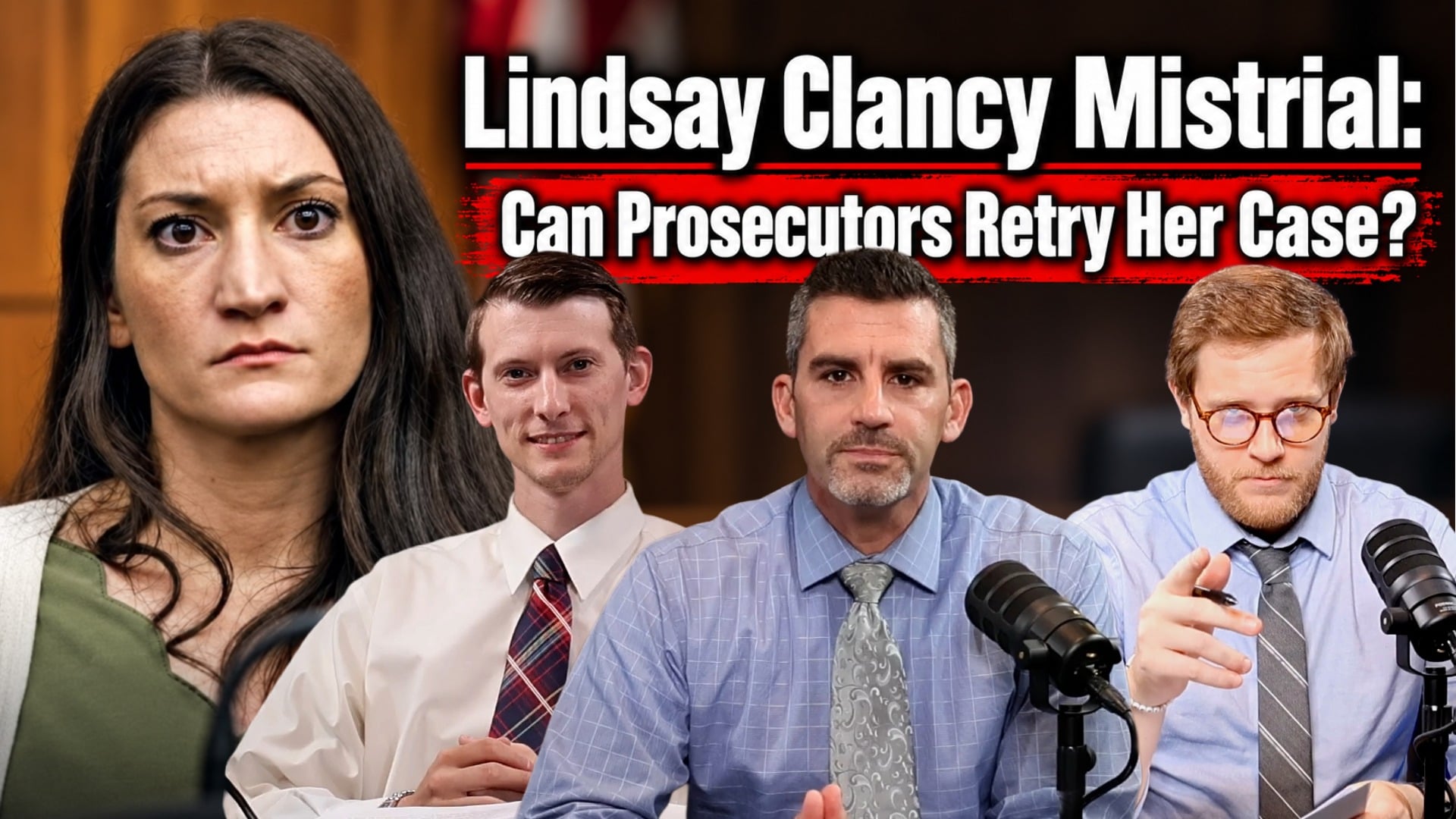
Welcome back, everybody, to the Now We Defend podcast this week, with the backdrop of the Lindsay Clancy trial in Massachusetts, having just wrapped up last week with a mistrial. We wanted to use this as a springboard to talk about some of these really complex mental health defenses that can sometimes be raised in cases, as well as talk about the mistrial a little bit and what that actually means in the law and how Pennsylvania handles that as it relates to juries not being able to reach a verdict. So with that in mind, we’re probably going to be talking a bit about the trial. Obviously we’re not we we didn’t conduct the trial. We weren’t in the trial. We’ve watched a lot about it in the news, but we’re not trying to form any opinions or anything about guilt or innocence there, but we’re using it as a springboard. So as you all know, Lindsay Clancy defense was Not Guilty by Reason of Insanity, Explained that she was arguing that she was not guilty by reason of insanity, which is a very specific thing in the law. And in that scenario, you when you’re arguing that as a defense, you are indicating that you are guilty of the crime in the sense that you did commit it, not guilty in the sense that you were mentally guilty, but that you did in fact do the act, but that you’re not guilty and you should be found not guilty because of insanity. So that begs the question, well, what exactly is insanity? We use that as rhetoric all the time, right? In society we say, oh, that guy’s insane, or oh, she’s crazy or this, that or the other thing. But in the law, that’s it doesn’t mean that there’s a very specific rule and language that we follow here in Pennsylvania. I believe it’s probably similar in Massachusetts, but maybe slightly Pennsylvania’s McNaughton Rule vs. the Model Penal Code different. But in Pennsylvania we follow something called the McNaughton rule. And I’m going to pass it over to you, Tim, to kind of tell us a little bit about that and unpack that for us a little bit, and then I’ll probably grab it back and kind of give some examples. Yeah. So you kind of caught me blind here because I am not prepared with the textbook definition of the McNaughton rule, but it is different from the kind of the Model Penal Code rule, which is what the Massachusetts court is working with. So the McNaughton rule is more restrictive. And essentially what it is is that there’s a first off, you have to show that there’s a defect of the mind, a mental health condition. That’s the same in the Model Penal Code definition. And that because of this condition, they did not the actor did not understand the nature or quality of the act that they that they were committing or they did not appreciate the wrongful of that act. That’s generally kind of the the McNaughton rule. It’s a little more specific than I think it’s. Right. I mean, essentially the last part of that is that they didn’t understand what they were doing was wrong. When you said they don’t understand the nature and quality of the act, that’s one part of it. Or if they did not know what they were doing was wrong, even though it clearly was. Yeah. And that’s based upon the defect of their of their mental essentially incapacity. And I think the main difference between that and what we’ll talk about with the Model Penal Code rule is that the Model Penal Code rule also adds in this idea of not being able to conform your actions to the standard, whatever the legal standard for appropriate conduct is. So you can’t meet the requirements of the law because of this condition. Why the Burden of Proof Shifts to the Defense Yeah. One of the things I thought that was interesting in Lindsay Clancy’s trial was we saw something that we don’t see a lot in criminal trials, and that is there’s a small shift of burden that happens here, right? When you claim I am not guilty by reason of insanity. And Pennsylvania, when we apply the McNaughton rule, which again is clearly mentioned and is true, Massachusetts applies the common law penal code definition, which is slightly different, but the defendant has to prove their insanity by a preponderance of the evidence that is the legal standard, not beyond a reasonable doubt, but it’s a lesser legal standard, and more likely than not is a good kind of shorthand for that. But that burden shifts a little bit. And I think that’s interesting, because pretty much in every other criminal case, we say all the time, you know, the burden is always on the Commonwealth to prove you guilty beyond a reasonable doubt. And then once they’ve made that showing, the burden is back on the Commonwealth to disprove it by beyond reasonable doubt. The Philosophy and Backlash Behind the Insanity Defense Right. And I think, you know, I’ve always even going back to my law school days, I remember that I’ve always had kind of a philosophical objection to the insanity defense, because part of it for a variety of reasons. But one of the reasons why the insanity defense is so difficult and is a lot of times it leads to outcomes that I think a lot of people find somewhat distasteful is because we’re talking about a legal standard, as you mentioned earlier, with insanity, but the legal standard is different from like a clinical standard, for example, a great point. So there’s dissonance in the the legal proceedings between the legal rule and the clinical standard. And that’s part of the issue. I mean, when we’re dealing with an insanity defense or some other similar defenses, what you end up with is you end up with a sort of a battle of experts, which we saw in the Clancy trial, where you got some experts saying one thing, you got other experts saying another thing. And the real problem that I’ve always had with that part of it is that none of this is really scientific. It’s not really a science when we’re talking about mental health providers and analysts or whatever, therapists, forensic psychologists, even some of them in the Clancy trial said that that most of their findings are based largely on self-reporting. So they meet with the person, they review the facts, they have some criteria that they use. But in a clinical environment, a lot of decisions that are made relating to mental health treatment are made based on face to face conversations with a person, and when decisions to prescribe medicine is involved. For instance, there’s no real knowledge about how the meds are going to affect a person’s mental health. A lot of it is kind of like a it’s sort of a test it and see kind of and error, trial and error. Right. So there is something about it that is inherently unscientific. Yeah, I agree with you. That’s actually a very interesting point, something I don’t think we think about a lot when we’re in a courtroom and we’re arguing these issues, but it makes it hard for juries to wrap their minds around it. And frankly, I think even attorneys have a hard time when we’re because we’re arguing over it. Yeah. I mean, these are complex issues that we do not see a lot. Right? No, lawyers do mean unless you’re going all over the country arguing cases where you’re only focused on this, but these are not issues that come up day to day rights a month, even year to year, right, in the legal practice, which is why they’re complex, which is why not a lot of people understand them and why we have to make sure when they do come up, we’re doing the research, we know the standards, and we’re looking at these things, but the minutia of that topic gets lost, I think sometimes, you know, and I’ll say this to just to throw a little bit of a wrench in the discussion a little bit, because I don’t know where you guys line up on this, but another big issue that I’ve kind of always struggled with, with the insanity defense, just on a philosophical level, is that there is a sense in which the the idea of insanity excusing severe criminal conduct is somewhat antithetical to our social compact and the concept of civil liberties. Right? It matters not from the perspective of the victim, whether the person is insane or not. And it’s so it’s different when we’re talking about this compared to something like self-defense, which is a justification for actions. Insanity is not a justification, but it’s a it’s a total defense. And we all, I think, understand as mental health becomes even more of a pressing concern socially, that everyone has the right to be able to walk down the street without fear that, you know, the homeless person on the corner is going to hear voices in their head and stab your six year old as you’re walking by. You know what I mean? So there’s a part of this that is very emotional for people because it does strike, I think, a very visceral chord and an analogy that I heard recently that I’ve kind of repurposed. I think this is a great analogy that illustrates the sort of philosophical dilemma here is if you went into the woods with another person and you killed that person, we would punish you, right? Under normal circumstances. But if you go into the woods alone and a bear mauls you to death. We don’t punish the bear. And the reason for that, it in part is not it’s not as simple as saying, well, it’s a bear, right? The bear is not a rational actor. The bear does not appreciate morality and the ethics of the decision. It’s motivated by forces beyond its control. It’s motivated by instincts and things that it cannot control. So there’s a sense in which that’s kind of a parallel to what we’re talking about here, because the bear doesn’t have logic, correct. It doesn’t have thinking. And the reason you wouldn’t it would be foolish, obviously, to haul the bear into the court and submit it to like our standard, the bear has no knowledge of any of those things. What does happen, though, a lot of times, is the bear gets submitted to, I guess we’ll call it the firing squad. Well, they take it out. Not if it’s a wild animal out in the wild. Now, if the bear wanders into town, that and that begins to illustrate some of the dissonance even further, right? Because because there is a sense where I think the sort of logical conclusion that we get to is that when people with severe mental health issues are prone to this kind of behavior. I think most of us would acknowledge that they do have an obligation to take steps to treat themselves so that they are not subjecting others to that risk, but many times they do not. And so essentially, that’s the thing that separates them from a bear. Right? And we’re living among bears. They have the ability to get treatment, but they sometimes don’t have the means correct or the wherewithal or I said ability, but even the ability, because they don’t they don’t know the path. They may not have the resources either. So like there’s tons of variables. It’s not it’s not like an apples to apples comparison by any means. But it does illustrate the point here, which is that, you know, you’re dealing with an aggressor in that instance, the analogy who is not a rational actor and cannot necessarily conform their actions to the law because they have no concept for it. And we would understand that we don’t just want to. We don’t want the grizzly to walk into town, you know what I mean? And that is, I think, something that is becoming a point of contention, I think, in the sort of social debate around this topic, is that people find it very distasteful that a person can commit a heinous act of violence and then still be among us, because we’re essentially we’re going to say that we’re not going to hold them accountable or they can’t be held accountable. There’s a perception that they’re getting off scot free, which is not the case. And we’ll talk about that. I mean, there’s consequences for it, but it’s not the same as if we held them just on a sort of retributive level, like a very basic level, like you need to answer for what you did. And I think that’s what people are struggling with. Yeah. And you also brought up a good point. I just and I want to get your opinion on this. What Victims and Their Families Go Through By the way Justin is here. We just haven’t put him on camera yet. I want to say hi. There he is. All right. So I want to get your opinion on this because Tim brought up a good point about, you know, the side of the victim and their family, right. I mean, and their loved ones. Right. And in the Lindsay Clancy trial, it was her own children. But there’s obviously, you know, the father, the grandparents, you know, the ants, the uncles, all those people that were family to these kids. Right. And that’s probably a struggle as well. Right. Because in this scenario where we are potentially, as a society, going to find somebody not guilty by reason of insanity and essentially let them off the hook in a way, because of that legal standard being met, which we have as a society decided is okay to do, we sometimes forget that there’s a victim here and there’s a family, and there’s all the emotions that are tied to that and the feeling of we kind of like they get a little bit kicked to the wayside. I feel like sometimes in situations like this, not intentionally, but it’s a byproduct of how it works. System. Yeah, yeah. The system. So I want to see Justin. What are your thoughts on that? I mean, you know, you’ve done a lot of cases where you’ve defended people who have victims of crimes and things like that. So I think this is a tough one because we as attorneys know when we’re going into a trial and we’re picking 12 jurors, we want them to be fair and impartial, and they’re instructed and as we know it, you consider what the testimony and evidence presented in the trial like. That’s what you consider. Right? And as hard as it is to think about, especially for, I think, non attorneys or people that don’t do this or aren’t involved in the criminal justice system, we don’t want jurors to be emotional, right. We want them to be fair and partial, look at the facts, look at the evidence and decide is this person guilty or not guilty. You’re starting to make me think AI robots are going to become jurors. That scared me. Yeah, but I hope not. That’s never going to happen. No, but, I mean, it’s that’s what we want as attorneys, but we as human beings know that emotion goes into it. Right. And there’s always going to be an emotional side to it. And, you know, I’ve dealt with cases, murder cases where, you know, someone’s killed a family member. And I think I talked about this on a previous episode. He ended up pleading guilty, but mentally ill. But the expert that did the report or the evaluation, you know, he was really teetering on that line of, okay, this is this could be not guilty by reason of insanity. But there was one specific piece of evidence where the guy had written a note on the door that said, like, parents went to Florida or something. So it was he was trying to basically that was the deciding factor where he knew what he was doing was wrong. Right. But, you know, you have family members, neighbors, friends, just people that, you know, cared about these people that are will say, you know, the victims, the people that were killed. And again, as attorneys, I think we’re certainly biased, and I think kind of desensitized to some of it because we see it and we have to do it and it’s part of our jobs. But when you kind of take a step back from that position and, you know, I remember after that case, you know, it was a sad set of circumstances. Two people died. And, you know, there was it was actually a very large family. And I remember at the plea, you know, there was 20 people there. And especially at the beginning when I first got involved in the case, they had been lingering a while. But the family at the beginning, you know, was like, we don’t want any type of plea deal. We, you know, it’s hard for people to, I think, come to terms with what actually happened and the fact that this person may be found not guilty. But in reality, and I think we I don’t know if we touched on this last week or it was one of our discussions prior to starting the podcast, but just because someone’s found not guilty by reason of insanity doesn’t mean they’re not guilty. The penalties are different. They still face consequences. Well, and and we were yeah. Faith, Justice, and the Human Wreckage of These Cases I mean we’re getting into the point where it’s like, what would those consequences be? But even before we get into that, you know, something that that has been a source of comfort for me in lots of cases like this is like my faith. I mean, that’s a huge thing. And I would tell people as a prosecutor and I tell people as a defense attorney to that, really what we’re trying to do throughout this whole process, no matter what side you’re on, is to get a result that resembles justice. We’re all humans, we’re imperfect, and the system that we’re in is imperfect. It has flaws. It’s got really great things. I think this system that we’re in, that we practice in is probably the best system that man has ever devised, but it doesn’t mean that it’s perfect. And so in the end, there are always going to be inadequacies in the legal process, in the law and and the source of comfort for me, the consolation for me, believing in God, believing in, in faith is that, you know, I may have opinions about some of these cases, but I believe that there is also a higher power that is truly a searcher of all hearts and understands, and that that person knows the true just outcome. And and I believe that that he will obviously be the one that gets the final say on that. So whatever we do here, as imperfect as it may be, is not the final. I mean, there’s very often in situations where you’re not going to get an outcome that really is a win for anyone. The defendant loses, the victims lose, everybody loses. The attorneys come out of it feeling worse. They feel, you know, dejected. They feel kind of like the system really has failed in some way. That’s a very common feeling, I think, for attorneys and for people who are in the system. But, you know, if you have beliefs about, you know, what comes after this, that’s a source of comfort, because, again, this is a human system. It’s not perfect by any means, and it will never be perfect. Yeah. Tim, that brings up a lot of good points. One of which I want to touch on is I know you’re a man of strict faith and have a lot of strong beliefs, and I actually think I’ve heard you preach in a way at different events. And I think that is one thing that makes you a very good orator, is you’ve been exposed to that for since your childhood. Right? And it’s a big part of your life, but also your belief system and your morals. But you’re also able to, in a way, understand that we are men who live in a world, and we are going to be subjected to the world system while we’re in the world. Right? And whatever comes after that comes after that. Well, you know, be aware of that. And it might be different for other people. And everybody finds their own consolation in that. And I think that what people, people in situations like this. Right. You obviously have a very terrible thing that’s occurred. Everybody acknowledges that. It’s terrible. I’m watching Reddington interview with Good Morning America. We talked about before the show. He acknowledged how terrible this was, the pain that Patrick felt that the rest of the family feels. And again, I mean, if you’re looking to this system for, like, some perfect happy ending, you’re not going to get it. Because even if Lindsay Clancy, even if the, you know, the most, you know, the most vehement people got what they wanted, even if, you know, people like this were convicted and we sent them to the gallows, it doesn’t bring the kids back. It doesn’t do any of that. So, you know, you always and I remember talking with a magistrate judge, a federal judge who was an adjunct professor in law school about this. We were talking about a specific case, and it was a it was kind of a high profile case. And I told him, you know, obviously, I, I believe very firmly that that people should face consequences for their actions, assuming that, you know, they are guilty. But even in facing consequences for their actions, you’re left feeling like this is just a terrible thing. There are so many lives that are broken in this process. And his response to me was, and we were both kind of coming at it from a prosecutor’s mindset. Was that the difficulty as attorneys, as defense attorneys, prosecutors, is that very often were confronted with just a massive amount of human wreckage. And and it’s our job as defense attorneys to help people, specifically the defendants, if possible, pick those pieces up and get on with their lives if that can be accomplished. And that and that is almost never a pleasant experience. It’s almost never something that you come away from feeling like, yeah, you know, we’re we’re really we’re really doing it. You know, a lot of times you come out of it and you feel like, is this going to. Is this even going to matter? Yeah. And a lot of clients struggle to see that too. They struggle to buy into treatment. And it’s our job to convince them to buy into that kind of stuff so that they can truly round a corner and, and, and be rehabilitated and move on with their life. But but that’s the struggle that we face on the human side is just the system. And, you know, all the inadequacies of it, the inadequacies of, you know, the situation were confronted with how do you move past something like that? And it’s really hard. And to kind of answer what Justin was saying. I mean, if you found not guilty by reason of insanity very often, you’re still going to be committed to a mental institution, and that length of time is going to be determined based on the mental need. Yeah. So and I could be wrong about this, but I think, I believe Lindsay Clancy was actually being housed in a mental health. And she still is. She still is even during the trial. Yes. Right. Obviously she’s wheelchair bound physically, but I think there’s also a like a major mental health component to that, her treatment that she’s undergoing and still will be undergoing. Right. So you brought up something there that I wanted to talk to all of you guys about. And it’s one of the virtues that I think here at Kearney Law, we, we, we hold dear. And that is that. And I know we’ve all talked about this, you know, regularly my belief in the way we should practice law is obviously we want to be sharp lawyers. We want to be very effective in court. But I actually get a lot of personal gratitude and feeling of positivity merely by helping someone. And if we can help somebody deal with their issues. And this you were just kind of riffing on this and talking about this and make them a better human being and in the process, help them fix their legal case. To me, that is that is the biggest win that we can get as a defense attorney, right? Those are the ones you feel good about because you feel like you did do something. Because you’re right. We are dealt so much wreckage every day that comes in. And it’s not even just our clients that are in wreckage. It’s it’s the victims of their crimes. It’s it’s the their families that are affected even that might not even be involved in the situation. Right? When you do the dependency. Tough stuff too. So you see a whole other side of it. Children I don’t see, but I and I was going to say, I mean, anytime kids are involved, I mean, it’s, it’s it’s just just use a lot of dependency stuff too. I mean, you know, that children, unfortunately, a lot of times are overlooked as a byproduct of the case, but in reality or sometimes the most traumatized. Absolutely, you know, and grow up to be majorly affected for the rest of their lives. Yeah. You know, and I don’t know if I’ve mentioned this before, but I mean, my my parents have been divorced since I was 5 or 6 years old. And one of the main reasons after, you know, coming over here and working with you and getting involved in the dependency stuff is it’s obviously different than custody or, you know, divorce. But I was very, very fortunate. And I have a younger brother who’s about 16 months younger than me. So he was even younger when my parents got divorced. But they never put us in the middle of it, right. Like we didn’t have to go to court and testify. And when I clerked for a judge over Franklin County after law school, he did custody. And I, you know, I saw what people did and what they do to their kids. And again, it’s different than the dependency. Dependency Court and Where It Overlaps With Criminal Cases But people that are putting their kids in the middle of, of of their problems, the trauma and just the hurt that it does to them is, is sometimes irreparable. So getting involved in the dependency stuff and being able to help both parents and children, you know, it is very, very rewarding. And it goes the same for the criminal stuff too, because like you said, although, you know, our client is our main focus and we want to get them a good result, we want to get them help, we want to get them treatment. We want to make them a better person. I think it’s important, and I think we all do a pretty good job of realizing that, you know, they are not the only one that’s affected negatively by the situation there. And a lot of times, a lot of times it’s, again, parents, kids, siblings. It’s it’s unfortunate, but again, it’s just kind of the nature of the beast where if we can help those people get their stuff or their act together, then hopefully, you know, going forward, any type of negative effect it had on their family or whoever else that may be involved, victims, etc. going forward, we, we, we kind of turn that off, right? Yeah. I think about this literally every day. I mean, you guys both know I have five children. They’re all young still. And every day when I meet with a client, talk about a case, I’m always thinking, like, when I get home tonight and I see my kids, I need to make sure that I engage with them, that I have a relationship with them, that I’m here for them. Because you are so right that the trickle down effect of their actions, they don’t even see it. But it is happening every day, you know, and that is having major long term effects on who their children become and who their parents, you know, how they feel about them and how what trauma they suffer. I mean, because being a parent, I can only imagine my child was struggling with something like this that would have a major impact on me. Right? And we see parents a lot of times, like what Justin was alluding to, that like, you have parents where they are kind of making some of the wrong choices with, you know, with kids or with anyone else in their family. And you, you kind of wish that, like, you could do something, you know, like you could be the one to give them the words in the moment that they need to say to make things all right with the kids. But you can’t. I have a case right now that is a very serious allegation. And the kids are not victims, but they were they were there. And that’s something that like that’s become a very complicated discussion, even though the kids aren’t involved. You know what I mean? The person charged with endangering the welfare of children, it’s something it’s something different than that. But because that charge itself endangering the welfare of children can occur, right? Even when the kids aren’t victims but are present during the commission of crime. And I’ve seen a lot of those cases, both on the prosecution and defense side. And I do think that, like, I think that sometimes prosecutors are very eager to charge that. And that charge a lot of times is an overcharge. Like I had a case one time where I was on call, officers were calling because they were looking to charge someone with endangering the welfare of a of children, because there was like a, there were drugs or something that were on the table and the table was accessible to the kids. Right. But it wasn’t like a hypodermic needle or something like that. It was something else. It was like a kid actually got Ahold of it and. Yeah, right. And what I told the officer was kind of just as like devil’s advocate. Like if it was a pack of cigarettes on the table, you know, you charge an endangering welfare of children because the kids could have reached up and grabbed the pack of cigarettes. Yeah. So, I mean, that’s not really the legal standard, but you’re right. I mean, there is an impulse in society whenever kids are involved, that all of a sudden the brakes start going on and, you know, the posture starts escalating because of the kids. Yeah. And it does change. I mean, even in the case that I was talking about with the kids being a factor, and there’s a Guardian in that case too. And listening to the Guardian’s assessment, I mean, the Guardian has been the Guardian has been kind of informative to my approach in dealing with the case, because the Guardian has observed things. And when you’re talking about the Guardian, we’ve talked about this case. You’re talking about the guardian ad litem. Yeah. Who is which? That is a role Justin and I frequently do that role, actually, and we don’t talk about our dependency work a lot on this podcast because it isn’t really kind of relevant to our the podcast of defense, because that’s mainly what we do. But you and I do do dependency work, which for our viewers, just so you’re aware, that’s essentially where the court appoints us to represent many times children, but sometimes also parents in a case where the child is put into essentially the dependency system due to them not having proper care and control, whether that’s by their parents or maybe by their own actions as a teenager, not going to school or using drugs or whatever it might be. Right? So that’s a really rewarding thing, you know? But it dovetails with the criminals. It does. And I actually frequently Justin, you probably going into a lot of things because there’s coinciding or potential coinciding criminal issues. And I have found and I’m sure you have two, that the judges who frequently do dependency cases know that we are mainly criminal defense attorneys. They do, and they will rely on our opinions and ask us questions about criminal matters in the dependency case. Absolutely. And that can be really helpful to help move those cases along effectively too. Right? I’m frequently called on by a judge to say, hey, what does this mean? Or what does that mean? Because these judges aren’t practicing criminal law, they’re only doing dependency work. So it’s not something, you know, even some of the other attorneys, especially one of the big things that I’ve seen come up recently deals with. And I know we talked about like we had our traffic episodes, but a big part of some issues that arise in dependency cases with parents is they can’t drive because they have a suspended license. It happens a lot. And so, you know, or DUIs and things like that. And I’ve answered quite a few questions I feel about that, you know, for judges or other attorneys like, hey, what does this mean? Or, you know, does this, does this carry a suspension? So and then the backdrop of a dependency case where you’re dealing with trying to reunify them, maybe with the parent? A lot of times if the parent doesn’t have a license, how are they getting the visitation? How are they? They can’t transport the kids, getting down to school, extracurriculars, etc.. Let me ask you this to tie it back in with the theme of the episode. How often in your dependency cases are you seeing? Like mental health issues frequently want to say there is a pretty clear tie. Yeah, we actually we have dependency cases where the reason the child is removed from the parent is because of their mental health issues strictly, and they can’t properly care for the child. You know, they’re living in squalor. They might not even they might be homeless. You know, I would tell you that in drug and alcohol, as far as when they get removed for something with a parent, that’s probably 80%. The reasons for dependency are actually very aligned with the reasons for why people commit crimes. Right? And that’s why we see frequently parents in the dependency system who are also charged with crimes. Right. And why we get these questions right. In York County, Pennsylvania here. Justin, I don’t know about your experience, but I think we have an excellent group of judges who do it. Very compassionate. The tenure of court is kind of different in a dependency case than it is in a criminal case. You know, it’s a lot more family and child welfare oriented. You know, obviously, the overarching thing is the best interest of the child is always what you’re looking for. But even the hearings themselves are very like non contentious. I feel like, you know, like so much less adversarial, so much less. And I almost feel like the, the rules of evidence sometimes like kind of go by the wayside. Like we don’t always object to hearsay and we’re not, we’re just trying to get to the best outcome for the kid. Absolutely. Yeah. So I think there’s a different way to practice that. It’s one I really enjoy. I call it my respite from my criminal defense because I get to work with kids a lot. So that for sure. And just like you said, it’s so much less adversarial. And really everyone wants the same thing as far as attorneys go now, sometimes you have a parent that’s just kind of difficult or, you know, doesn’t want to work the system or doesn’t want to do this or that. So you have to advocate for them, obviously. But at the same time, you know, when I’m talking with, you know, the solicitor’s, other gardening headlines, legal counsel, depending on what my position in the case is, everybody wants the same thing, right? We go into 99% of the time. The initial goal is always reunification. And sometimes that that doesn’t ultimately happen. But you know, it’s it’s it’s a process. Yeah. But I really do enjoy the fact that I get to walk into court and, you know, see a lot of the same faces in the the dependency bar here in New York isn’t terribly big, but I think at this point I’ve been doing it for, you know, about six months now and I really, really enjoy it. And like you said, it’s it’s kind of a break from the adversarial aspects of the criminal practice. We’ll say you said something that that struck a chord with me, too, because I’ve thought a lot about it in my in my personal life, when we’re talking about cases like, you know, the Clancy case or like some of the other cases that we deal with, you know, whatever your opinions are on how the case should have been handled or how it should have resolved, I think that everyone in their right mind is grieved in their heart by what has occurred. Like, there’s nobody in their right mind that that looks at this with such vitriol or such, you know, such a hardcore band about what they think happened or whatever that they are not just, you know, there’s obviously a very deep sadness that you have over something like this. And it does, you know, I’ve had frequent times where thinking about this case or thinking about some of the other cases that I’m dealing with, where I do go home and you hold your kids a little bit tighter, you know, because, you know, you don’t want to be in this situation. You don’t want to have something like this happen, and you do want to protect the people that you love and care about. So and I think that’s the difficulty, the effects that our client’s actions sometimes have on their children. And I think you almost can’t not take some of that home with you. Right, right. And you think about, okay, that motivates me to be a better parent so much I think try. Yeah, exactly. And I and I think that so much of the conversation when cases get, you know, they get national recognition, it shifts away from that human reaction. And it becomes very much like this is something that I have to feel strongly about. And we’re going to talk about that in another episode. The Clancy case is so polarized, right? I mean, it’s so polarized. You’re right. It got away from it became almost like Hollywood. Right. And people had such, you know, significant opinions on, you know, women’s rights and, and how that applied in this case. And, you know, whether or not Lindsay was guilty or should be found not guilty by reason of insanity that you had almost like it felt like a political divide, right? You know? Yeah. It does. Yeah, I agree with that. And I think that that, you know, these are always very difficult cases. And when we’re talking about insanity issues to. I mean, you’re never, like we said earlier, you’re never going to fix really. It’s never going to be the way it was. And no matter what the result is, it’s not going to be, you know, like a like a total victory. It’s, you know, people are going to carry the, the stain of this for ever. Everybody involved, I think is going to have something that they’re going to be carrying as a result of this. And yeah. So yeah, there’s pain. I’ve heard that, I think they’re seeing if they can maybe work something out. Now I’ve heard that to the dust is settled. So yet to be seen whether the district attorney out in Massachusetts there is going to come with like an offer, kind of like a middle ground olive branch, if you will. It’s hard because just on the facts alone, you know, I’ve said this before, almost from a prosecutor’s perspective. I mean, this is the kind of thing where it is such a serious occurrence, you know, that that he almost from a prosecutor’s perspective, this could be the kind of case where it would be a mistrial like a thousand times. And I would think you’re going to try it 1001 times, you know what I mean? Yeah. So you can’t you can’t just retry retry, retry gets to a point where they’re not going to retry it. Well I think legally they can’t I mean legally they can’t I don’t know depends on the argument on a mistrial. If over and over and over I think, yeah, you can retry a mistrial, I’m not aware of a rule that says you can. Well, there are some, but it would have to be about it might be wrong. It would. It would be about like, are they bringing the prosecution for like harassment or something like that. Like, you know what I mean? Yeah, some of those kinds of things are standards there. But you mean you tell me. Ten mistrial at the end of this episode. I do want to talk about mistrial generally, and let’s talk more about that then. Okay. But, Tim, you did bring something up. That is a little bit off topic, but I also want to talk about with the three of you or the two of you, and that is. Yeah, the three of you talking in the third person here. What Makes a Good Judge (and the “God Complex” That Doesn’t) Just Tim’s all their alter ego, but it is that you had said something to the effect, Tim, of the people that are participants in our justice system sometimes walk away from the justice system. I think many times unsatisfied, unhappy, upset, angry, maybe. And I think what we need to realize as players in the system and what our judges need to realize, and I think many of them do this very well. But there are some that I think struggle is that when people come in front of the court system, and I want to get your take on this, but when people come in front of the court system, this might be the singular time they’ve ever been in a courtroom. Yes. There ever seeing a judge, the holy man up there on the black robe. Right. Or that they’re ever seeing lawyers arguing back and forth and getting all worked up. And I think we forget sometimes that the show of it all is experienced by that person in a way that they’re going to go and take for the rest of their life, and that’s going to be their judgment on what the system’s like. Right? Right. And day in and day out, judges sit there and we sit there and court and we do case after case after case, and it almost becomes like a machine sometimes. Right. And I think the good lawyers always remember that it’s not a machine. It’s a personal experience for this individual. And from a judge’s standpoint, I think the judges that do it really well never lose the compassion of being a human being. They’re not a robot up there. They are a compassionate human being that’s trying to get to a good result. And they are respectful above all, to every party. Yeah. What do you guys think about it? When I see judges that are sometimes disrespectful in court? Yeah, I think about and I might not even be involved in the case. I might just be sitting there and I’m thinking, man, this person is going to think the justice system is so rigged and right. And just like it’s like, yeah. And that’s talk about philosophical thing, you know, philosophical opinions. I mean, here’s a hot take. You know, I, I in law school was was completely on board with our system in Pennsylvania of like popular election of judges. And I as a professional in the field. My opinion on that has changed. You know, I’m kind of of the opinion that like, we really shouldn’t be voting for judges because nobody really knows what they’re voting for. I mean, that’s the reality. Like you said, nobody most people have had zero interaction with the legal system. They don’t know what the judges views on certain things are. They don’t know how the judge acts in court, how the judge speaks to people, how the judge talks to victims, how the judge talks to defendants, how the judge talks to attorneys. And I, on several occasions have have had judges where I’m sitting in front of them. And even if they’re speaking to the defendant, like as a prosecutor, I would sit and listen. And I would think some of the things this judge is saying to the defendant are not appropriate. And I’ve had that where I’ve been the subject of it, where the way that a judge has talked to me has been, I think, profoundly disrespectful and unprofessional in the legal community. I just think there’s there’s sort of a way that you’re supposed to act to your point in the field. And I think some judges, whether it’s inexperience because they didn’t practice certain types of law or their practice was more limited, or, you know, they became a judge very quickly or whatever, for whatever reason. A lot of them are not necessarily hip to some of those customs. And so we treat each other in the bar differently. And even judges who’ve been practicing more recently, we treat each other differently than some of the judges who have been removed from the system and now are sitting in a as a judge role for a lot longer. And there is undeniably kind of an old guard out there of judges who are very old fashioned in the way they do things. And some of those, you know, there was a time where some of that stuff was okay and it’s not okay anymore. And, you know, they got to get with the times because it’s here and changed Pennsylvania. We’ve had a pretty big turnover of judges, I would say, in the last five years even. And I’ll tell you, I have been highly impressed with some of the judges that we now have on the bench. Not that I wasn’t impressed with judges before, but I do think there is a way of doing things that, like you said, Tim is kind of the older guard. Justin, you kind of know who I’m talking about here. We have certain judges that you and I frequently. I’m not going to say names, but you know who they are that we appear in front of and they take the time to talk to the individuals. They’re respectful. They’re never condescending, even if they have an opinion which is obvious and relevant in their decision. Yeah, they’re still very respectful in delivering that and making sure that everyone feels heard. Yeah. And we just had a conversation. And in fact, Tim, I had this conversation about this judge with you to who you appeared in front of recently about how highly impressed you were with that. And I just, I don’t know, I want to get your guys thoughts on that. I mean, I definitely I think I’ve got some things to say on this. So I will say that I have been in my legal career since I’ve graduated law school, very, very blessed to have worked with some very wonderful judges who I think operate in that way, that you’re talking about their compassionate. They understand that we’re all human beings. They don’t view themselves as, as, you know, higher than anyone or like they’re, you know, this, this, this God on the bench. Right. The judge that I clerked for in Franklin County out of law school. Honestly, he reminded me a lot of my dad, like, just a good personality, very down to earth, laid back with serious when he needed to be serious. But again, I think the way that he approached things really helped me as an attorney, especially a young attorney, like how to actually think about cases and how to approach cases. Another thing here in York, I was very blessed when I was in the DA’s office to have been assigned to technically four different courtrooms and I think five total judges and some of the older judges that I was in front of, especially early on in my prosecutorial career, really helped me in different ways. Again, how to be a good attorney, how to be prepared. You should always be prepared. But you know, every judge has their quirks, right? They all have things that they like that they don’t like. What I really appreciate about some of the newer judges we have here in the county are that they will approach cases, like you said, with compassion, with an open mind, and if they don’t know something or don’t have a ton of experience with it, they ask questions. They don’t just come to you and, you know, lecture you or assume that they know what’s correct or how they should go about things. They ask for opinions, the lawyers opinions who’ve been doing this type of work for for a number of years. And it’s just so refreshing to have that because, you know, like Tim said there and you said, you know, there’s that old guard where I think back in the day, not even that long ago, people become a judge and they just think they can do whatever they want. Yeah. And they just don’t respect people or they, they, they claim their respecting people. But really what they’re doing is just trying to lecture you or try to, you know, prove that they know everything or that they’re right when they absolutely. The judiciary, I think, more than any other branch, is prone to a very special kind of tyranny. And that’s why this was a central divide, especially among whether or not we were going to have a federal judiciary. This was one of the founding questions in this country, and a lot of people don’t realize how much of a divide that was. I mean, you can go read The Federalist Papers and you can see some of what this debate was back in the day. But very few people have ever read the Anti-Federalist papers, right, because they were the losers in that social debate at the time. So their view has largely been lost to history. But if you go and you look and you read some of that stuff, you can see that many of them were almost prophetic in their predictions about what the judiciary could and would become. And that is something that every judge has to be aware of. Yes, you can pretty much make almost any decision on the bench assuming you’re not reversed, but that assumes that somebody doesn’t like your decision enough to even appeal it in the first place, which is a massive resource sink and a time sink. And a lot of times it’s not worth the effort to appeal it. So a lot of judges feel insulated from that oversight because they know no one’s really going to appeal me. And, you know, you do get to a point where you have something resembling absolute authority from the bench, and that can be a problem for some people because it is a God complex. Yeah, yeah, I’ll tell you, I haven’t done this quite a long time now, but very short period of time since the Federalist Papers. I would say that in my career I have I literally believe that I have seen a shift in how judges act on the bench to individuals from what more was very authoritative and somewhat despondent, made people feel despondent to now almost like, hey, we’re all we’re a team in this. Yeah, we got to do this. It’s a little adversarial, but we’re going to all try to get to the right result. And Justin, I know you’ve seen this in Tim. I know you have as well. But one of the things that I think is most effective by a judge is so humbling. To see it happen is when a judge literally says, hey, I’m a newer judge, or I’m new to this area of the law. And like you were just saying, he actually asks the lawyers, like, educate me on this. Tell me about this. He’s not up there saying, I know what the rules are and I’m not going to listen to you and this, that and the other thing, they’re actually asking for help. Yes. And that even though they make the final decision, that is so damn humbling that it makes everybody in the room feel like they got their day in court. Yeah. You know, and that they were heard and they at least got to say their piece, you know, and I think it’s a, it’s a tool that might be used as a tool to be humbling, but it is so effective and I appreciate it every time I see it. Yeah. And like I said, I just think that there are certain judges out there that. I truly believe they they think or believe that what they’re doing is their absolute best. And don’t get me wrong, I love all the judges in the county. Art of County. We have a lot of great judges throughout central PA, but I think at certain points, certain judges do kind of take on a little bit of that God complex because they don’t want to be wrong and it’s okay to be wrong. We’re all wrong on a daily basis. We’re all human. We all make mistakes. Yeah. But like like we both said, you know, when a judge can look through the attorneys and ask questions and not in like a condescending way, right? That to me not only makes me feel like a, you know, a better attorney because they’re asking for my opinion and it’s, you know, makes me believe I know what I’m doing. Right. But it also is very good for our clients because then our clients get to see, okay, this judge trust my attorney to ask a question rather than just go off. Right. And that can be really, really hard to deal with. And kind of reconcile with a client is if you’re in court and you know you’re doing your best and you’re putting your case on whatever, and a judge starts to reach out or shut you down or shut you down without giving you an opportunity to speak. And I think that is something that, again, I don’t think judges, at least here in central PA, for the most part, dude on purpose. But I do think that there are certain judges that that it does happen. There’s kind of a way to do that. Like, I was just talking with a defense attorney recently about a custom which kind of reared its head recently with me. And, you know, there’s some judges that they’re known for not asking many questions. Right? They do tend to be silent. Their job, they’ve they’ve interpreted their job as I’m going to listen to the arguments and then I’m going to research it and I’m going to see where the law is. But you do have judges that will grill you during hearings. And that’s I think that’s their prerogative. They can grow and ask questions and stuff and see how do you respond to certain counterpoints in the argument? They’re trying to test the waters. But one thing that’s always kind of frustrating, I think, for all attorneys is when the judges decide that that they’re going to do that during testimony, which I’ve seen before. And that is something I think that that is kind of a no no. Even in like, I think all attorneys who are practicing currently know that. Like, if you’re going to interrupt my argument and you’re going to make me explain myself, that’s your prerogative. But if we’re like in testimony and I’m trying to build for my argument, put things on the record and you’re kind of interrupting the record to argue with me, that’s a little bit of a problem. And I think I’ve seen that in numerous counties that that is a tendency that’s out there. And what it does is it almost makes it look like the judge has already made up their mind in the middle of the hearing. And to your point about the judge that we were talking about earlier, that really takes time with everything. You know, our time is kind of important. So there’s a sense in which we, I think might get a little bit frustrated that a hearing that maybe should have only taken 30 minutes takes like an hour and a half. But in the end. You’re right. We come out of that hearing and we feel like we accomplished a lot more than if the judge had just simply said, I’m only giving you 30 minutes. I want to get out of here and go golfing or go home or whatever. I want to get off the bench. And there are some judges that that is their approach is I’m going to I’m going to fly through everything. I’m not going to take the time with it because my time is really important. And when you have a judge that is a public servant and their mind is public service and they’re going to take their time and they’re going to they’re going to get to the right outcome as best they can. You do come out of it feeling a lot better, even though you may come out of it thinking like, man, that took a long time. You appreciate it in the end. Well, and in the end, I think that could also end up saving you time. Yeah, right. Yeah. Less times to come back and you don’t have to repair with your client so much too. I mean, you brought up such a good point and that was that. The the way the judge acts towards you in court trickles down to the client, who then feels like they got their day, or that you got to make the arguments and they feel like they were heard, whereas if you were shut down, you didn’t get heard and your clients upset with you that you can’t repair that, how do you repair that? And a single judge has the ability to do either, you know, and probably get to the same outcome ultimately, but create way less of a problem with you and your client. And I saw this a lot as a prosecutor, and I’ve seen it a little bit on the defense side. I don’t know if you guys have seen this, but I’ve seen a lot of occasions where a defendant will come into court, and they are very vehemently arguing that a judge should recuse themselves, but there’s a conflict or something. And as a prosecutor, that I would always scratch my head about that because I’m like, the record is completely devoid of anything indicating a conflict here. But a lot of times what’s what’s driving that is because this individual has had prior experiences with the judge and it’s been bad. And so they’re coming into it thinking to your point, this judge has it out for me. This judge has a problem with me. And now I feel like in this new proceeding that this judge is going to railroad me. And as a prosecutor, that was always something that I, I just was never involved in those prior cases. A lot of times on the defense side, we get to talk with these people and we get to hear like, okay, I was in court before in this judge screamed at me because I, you know, I was asking questions. You know, they they arranged me and I wouldn’t stop asking questions. And they got impatient and they yelled at me. And now I feel like this judge can’t be fair to me, you know what I mean? And it’s that kind of stuff. Yeah. And in reality, the judge probably doesn’t even remember. Correct. But the person feels like person remembers to. Your person remembers because it was their only one other time in court. Right. And that’s again what they always have to keep in mind. I want to tell one more story that happened to me when I was a young defense attorney that I think is on point with this, about how judges can do this so well. And then I want to I want to move on, because we kind of got a little off topic there, but a lot off, a lot off topic. Yeah. When I was first starting out as a defense attorney. So I as all of you know who watched this podcast, all of us have been former prosecutors. I spent a number of years, as did Tim and Justin, in the district attorney’s office, prosecuting very serious crimes. But afterwards we became defense attorneys, hence our name. Now we defend. But that said, I remember my very, very first federal defense case that I was appointed to because I was on the appointment panel back then. I went to federal court. I had no idea what to expect. I had talked to my my mentor at the time who kind of schooled me on what to expect. So I had an idea, I guess. But in reality I was like, shaking in my boots because I’m like, what’s this going to be like? Federal court, right? I was used to state court when I got up there. I was there for a proceeding known as an initial appearance, which is in federal court. That’s when your client is essentially initially being charged. They’re appearing in court, and they are. It’s their first time appearing before a judge, and the first time you as their appointed attorney is meeting them. And you’re essentially the case is getting started. So I remember walking to court, and I had just spent probably 20 minutes meeting with my client, who was in custody with the US marshals, trying to make him feel comfortable with me. This younger attorney who, you know, and I didn’t tell him this was my very first federal case, but you know that I kind of know what I’m doing right, when in reality, it’s like your fingers are crossed. Open your right. So I get up to court, and this magistrate judge is retired. So I’m going to call him out by name. It was Magistrate Judge Carlson I love him. Yeah, that was the judge I was talking about earlier. Okay. He’s a wonderful, wonderful man. Wonderful man. Very, very compassionate, very kind, very smart. Smart as a whip. But in any event, we go into court and I go up to the bench there to present the case. And Judge Carlson, before we started, goes, oh, Mr. Smith, I see you got attorney T.L. Kearney. He’s a very well highly respected member of the Federal Bar. You’re very, very lucky to have him. I’m surprised Mr. Kearney was able to make time to be here today. And that just made my client feel like I was the best lawyer in the world. That he just got randomly, you know, he got the lottery struck. And I remember looking at the judge, like, kind of like a deer in headlights. Like, you don’t even know me, like, you know, but it just it set the tone for my relationship with my client. And we ended up getting a great result in the case. My client trusted me. It lasted like, a year. But, you know, we had multiple other court appearances. But that five second statement that he didn’t have to make made the case go so much better. You know, he was always a consummate professional. So I, I can’t call it to judge my name because there’s still an active judge. But literally the same exact thing happened to me for my first one. And I remember you telling me that story. Oh, I told you what happened to me. Yes. Did that happen to you, too? Oh, good. I walked into court and I’m like, meeting the AUSA. And actually, I walked up. It was actually the probation officer who I thought was the prosecutor. So that was the whole thing. AUSA, assistant United States attorney. Yes, but the judge comes out and it wasn’t the same where, you know, they just started like we start going through everything. And the judge was like, well, you know, tourney barons here, you know, would you like me to appoint them? And the guys like looking at me and, you know, I’m just sitting there. I’m like, Lisa. Yes. And then the judge kind of did like that same spiel. And I was just like, this is crazy, because I think I had just talked to you about it because it was my first federal appointment. We were it was almost like an identical situation. And you’re you’re not kidding. You know, like, as soon as the judge said that, my guy looks at me and he’s like, oh, I’m in good hands. Yeah, like you are. It’s almost like it was just like, so nerve wracking being there for the first time, not knowing what to expect, but like what a judge says and does in court in front of your client, like, can make such a big difference. Such a big difference. Yeah. All right. We’re going to get back to mental health a little bit here. Reading Pennsylvania’s Insanity Standard Word for Word Okay. And before we move on from not guilty by reason of insanity, I want to read essentially the McNaughton role or the legal definition in Pennsylvania. So it’s clear for our viewers. So if you’re arguing that you’re not guilty by reason of insanity, again, Pennsylvania follows the McNaughton rule, which essentially says that the defendant is legally insane if at the time of the offense, because of a defect of reason caused by a disease of the mind, the defendant did not know the nature and quality of the act, or if they did know that they did not know what they were doing was wrong. Okay. So that’s that’s the rule. All right. So and we did say that the defendant must prove that argument or that not rule by the preponderance of the evidence, and then it shifts back to the government to prove that they are actually, you know, that it’s not reached by beyond a reasonable doubt. All right. I want to move to another kind of mental Diminished Capacity: From First-Degree to Third-Degree Murder defense that comes up sometimes. And it’s the defense of diminished capacity. Now, this is not a complete defense. This is not a defense that will get you found not guilty. And it is one that is frequently confused with insanity. And Justin, I’m going to talk about it, but then I’m going to pop to you to kind of explain it even probably better than I will. But basically, diminished diminished capacity is a partial defense to a crime. And it’s really a partial defense to what we call in the law, the mens rea. And that that is the mental state that you have to commit a crime in. Okay. So it’s a partial defense to say, hey, the mens rea that’s necessary here is not met because these specific intent is not there. And really diminished capacity. Justin, I think you probably agree with this. Really. We only see it used in murder cases. First degree murder. Yeah. Because what it can do and what I’ll have you explain that. But it has a specific way of making the outcome of that murder charge better for for the defendant. But essentially the way it’s defined, guys, is that because of a mental abnormality, the defendant was incapable of forming a specific intent to kill. So that’s basically what that argument says. They can be mentally ill during that, but they are actually legally per that definition of insanity, sane. All right. So Justin, I’m going to kick it over to you to kind of just explain a little bit about what that defense of diminished capacity can do if you’re charged with first degree murder. Yeah, I think the, the just most simplest way to put it is, like you said, it negates the specific intent. So you go from first degree to third degree. Yep. So third degree does not require specific intent to kill. Really just requires that a killing malice and yeah but for first degree you have to have malice and specific intent. And I can’t remember if we talked about this on one of the podcasts. But specific intent can be formed like that in an instant. And if there is a diminished capacity defense, I think, you know, they can be tough. Yeah. Because obviously as a prosecutor, when you have first, first, third, you’re always you’re going to be shooting for first or you’re really not even talking about third degree because you know, you want them to have that specific intent. But that’s really, I think what the biggest thing, the easiest way to put it is, you know, it prevents proof or negates the proof of the specific intent, which again just reduces the degree of the the murder charge. So it’s kind of the same effect that like voluntary intoxication has rights because it’s the same interplay where where the argument is essentially this was not this person’s conscious object to end the life of another person. Now they did something that did that. Yeah. And the argument is they didn’t do it with specific intent to kill, but they did it with malice aforethought or whatever. Well, that’s I think we should just even just touch on that real quick. The voluntary voluntary intoxication. Yeah. The only time it’s a defense is essentially first degree murder, Voluntary Intoxication Is (Almost) Never a Defense right? Yeah. There’s really a good point. And I’ve not seen diminished capacity in other settings. I think I’ve seen some where they’re trying to they’re trying to kind of introduce it, but legally it doesn’t really work. Yeah. You know what I mean. So it doesn’t in any other real capacity. I agree with you. I do want to talk about the voluntary intoxication, because this comes up a lot where I have clients come into the office and they say, but I was I was drunk, man, I was wasted. I had no idea what I was doing. Why do I get a DUI? Yeah. Why did I get a drink? 14 beard. Why am I charged with trespassing? Because I wandered into this place or. Well, that’s. I know we’ve talked about that before. You know, people just go out and party and get hammered drunk or, you know, due to many drugs. And they wander into someone’s house. And I think we’ve talked about that with just how they can get shot. The kid that got shot over in Montgomery County, that was that. That officer’s been charged. Oh, I didn’t hear about that. There was like a college kid that was trying to meet up with friends, and he was knocking on the wrong door, and he was he was intoxicated. I don’t know how badly he was impaired, but the officer, the officer shot and killed him. Was it an officer’s home? No, the officer responded. Oh, okay. So it was a 911 call because this guy was knocking on the wrong door and the guy ended up being killed. Did he go inside? No. Oh, well, he probably should have gotten charged then. I mean, yeah, yeah. I mean, obviously that’s one of those things where, like, everybody is kind of holding their breath because everybody reacted to that and was like charged. The cop charged the cop. But also, you know, you don’t know necessarily all the facts at that point. Like, was this kid belligerent? Like, was he really, really hammered and being a fool, you know, was he trying to barge into somebody’s house at the wrong time? And not exactly, but it appears from the investigation, at least from what we’ve seen, that the kid was compliant with the officer, and the officer just kind of went high and wide. But again, that’s more to come on that. But body cams probably. Yeah. So that but that was you had said about that scenario and we’ve seen that. Yeah. Well where I was going with it like we’ve talked about before, you know, you get intoxicated, climb through the wrong window, somebody shoots in the house 99, 100 times are going to be justified. Yeah. You know, so like it that’s the thing with volunteer, you don’t have a specific intent to commit a crime inside the. So like, you wouldn’t be able to be charged with burglary, right. I mean, it’s it’s not the same. I know I’m comparing apples and oranges here. It’s usually going to be trespass. Yeah. Right. Yeah. Right. Because the intent that is satisfied by your your intentional object of entering the premises, but you wouldn’t be able to do burglary there because you have no intent to commit a crime inside the residence. Right? And if you were charged with burglary, could you argue diminished capacity? Like, I don’t know. Well, I mean, you would say you’d lack the intent to commit the crime unless they actually committed a crime inside. Right? And then that’s still hard. Yeah. Yeah. And hurt someone or something. But that’s a that’s an interesting because it does I think creep up in other areas. Yeah. But it’s it’s not as neat. Just to be clear for our viewers guys. Again Justin said it very well. Voluntary intoxication is not a defense to any crime other than murder. Okay. So you don’t come into our office and say, but I was drunk, but I was high, but I was impaired or I was wasted or whatever you want to call it. It’s not going to get you out of the crime. That is not a defense. It’s not usable in court. We’re going to have to tell you that it’s not going to work. And I think they’re even beyond that. Not to get too far afield, but there are some people who believe that they can’t plead guilty because they were so drunk they don’t remember something. But what do we have for that? We have no contest. Please. But even that is not not necessarily always appropriate. Because when we get evidence, I mean, your actions are going to be on film. Your actions are going to be detailed by eyewitnesses. So when you plead guilty to something, you can just because you don’t have a specific recollection of what happened. You can acknowledge the facts are as alleged based on what you see in the evidence, and you can accept those facts as true. The frustrating part for me as a prosecutor was people would come in all the time and say, well, he was drunk and he pleaded no contest. And it’s like, that’s not really what the no contest is for, because, yeah, you may not remember all the finer details, but you can look at the police report, you can look at the video and you can see that that is you doing such and such a thing, and you can acknowledge that you committed the crime, which is the strong preference in the laws for people to acknowledge it, not no contest, please. Alfred, please. Those are not preferred outcomes in the law because you’re kind of splitting the baby. You’re getting someone who’s being punished for a crime, but they’re not admitting they did the crime. So but let’s also remember, those are tools that are sometimes useful in accomplishing outcomes when someone cannot or will not say that they actually did it, but they still want to get a certain outcome or we still want we do use it for that sometimes. No Contest Pleas, Alford Pleas, and Guilty But Mentally Ill Alford plea or the no contest or what’s called nolo content. Most of the time it’s you’re that like there’s some like obviously, let’s say the Commonwealth has enough evidence to prove that you committed the crime, but your contention is that you didn’t do a thing right. So like like let’s say they’re saying you stole something. You might not be contending that you might be contending in a no contest, that I just don’t remember it. Yeah. And and I think there are some prosecutors, I think and I always was kind of a prosecutor where I would allow it for most cases. But there were some cases where it’s like, that’s not going to work. Like, you can’t just say, I don’t remember and get out of pleading guilty. Yeah. There has to be some some substance to not remembering in the Alford plea thing. So I don’t know if you guys have seen this. I had seen this on Netflix for probably a year or two now, and it’s a little bit of an older case. But the staircase, you know, now, that was a great episode where the woman got pushed down the stairs. Right? Well, allegedly. Yeah. Then they came back on appeal. It was like the fourth appeal. And they claimed that like an owl attacked her. Yeah. The birds. I will say this. I was skeptical of watching this series. It was eight, I think eight episodes on Netflix, and it was a little bit longer. I think they were all over an hour. But when you get to the end, I mean, based on what the woman’s injuries were and like the whole thing with the owl, I’m like, there’s no way this is going to make any sense. I’m not saying that’s what happened, but the guy that thought of that and actually presented it did a great job. Yeah, I’ve had cases where he ended up doing an Alford plea. Right. And he did not admit guilt. Right. You don’t. As part of an Alford plea, he maintained his innocence. Yes. That’s that’s specifically as opposed to no contest with Alpha Plea. You’re actually saying instead of saying they could prove I’m guilty, you’re saying I’m innocent, but I’m taking the deal anyway. It’s too good to pass up, basically. Yeah. Let’s also remind our viewers that. And I frequently explain this to people when they say, but TL on that prior crime, I pled no contest. I didn’t admit I was guilty conviction. Exactly. It is the same effect as if you were guilty as it relates to your prior record score, as it relates to enhancements for future crimes of similar conduct, things like that. So there’s no. Oh, that doesn’t count the same way. It counts the exact same way. You can say I didn’t plead guilty, but in all other aspects has the same effect as that, but they feel so much better. I think some people do, and you’re kind of quintessential. That’s just how you get there. Right. There’s sort of quintessential examples of when a no contest plea really is the best option. And that is like, maybe there is like the facts don’t look good for somebody. But like we would say we have an explanation, but we’re also acknowledging like a jury’s maybe not going to buy this explanation because things just look so bad for this person, right? And what you’re saying is, you know, obviously if I if it were up to me, I would tell my story. I would explain this differently. But if the jury here’s the facts, as alleged by the Commonwealth, the jury might convict me. And they may they may decide because it’s the jury’s decision, whether they believe me or not. They may decide they don’t believe me and they may convict me. That’s what you’re doing with a no contest. Yeah, yeah. All right, let’s move on to the outcome of guilty but mentally ill. Okay, so this is where the defendant is again, guilty, the honorable doubt. And they’re either found guilty at trial or actually you can plead guilty, but mentally ill as well. Meaning they and their claiming I was mentally ill at the time of the offense. This is not that they were legally insane. And Pennsylvania defines mentally ill much more broadly than I think it does insanity. So again, the verbiage for guilty but mentally ill is that a person lacks substantial capacity either to appreciate the wrongful Ines of their actions or to conform their conduct to the requirements of the law. Okay, so normally when someone is found guilty but mentally ill, or they are pleading guilty but mentally ill and they are sentenced, the sentence usually is highly structured in a treatment type of sentence. This would be things like mental hospitals or mental health treatment, even outpatient capacity, things like that. And that can be more the penalty. It’s less retribution as it relates to you’re going to go do time in jail and you’re going to sit there and you’re going to think about this. It’s more we’re going to get you the help. So this doesn’t happen again, and you can reintegrate into society. After Commitment: Release, Relapse, and State Hospitals And that’s what happens after acquittal to what, like an acquittal by reason of insanity under the Model Penal Code, that person would also be committed to a mental institution for a period of time. And then once they institution determines that they can be released, that they satisfy certain conditions. There’s usually like an assessment that has to be done by mental health providers. And then if that determination is made, they can be released. And so there are usually conditions they have to abide by. And if they don’t fulfill them they can be recommitted. Or you know, there’s lots of there are still conditions. So in the Lindsay Clancy trial, if she would have been found not guilty by reason of insanity. The end result of that would have been commitment. Commitment, potentially and likely it could also result in commitment. And then and this is the part I think some people find kind of kind of, you know, unpalatable is she could be recommitted, but then there could be a determination very quickly that she is fit to reintegrate into society. So and that path is there for a lot of those people. Now it goes both ways. Sometimes they do sit there while, and it takes a very long time for them to read. A lot of times, I mean, some of these people never get out or they don’t get out for ten years or whatever, you know, and something that was kind of fascinating to me was realizing that, you know, because I was I’m a history buff, too. And I went back and I was watching something about a lot of like the Nuremberg trials and a lot of the movie about that. No, I didn’t watch that. What was that? What was that movie? Oh, I think it’s just called Nuremberg. Honestly, that’s also on Netflix. Yeah. Russell Crowe I did see that movie. Very, very good movie. But a lot of those guys were sentenced to, like, really long periods of time in prison, and a lot of them did not serve full terms in prison, you know, like they were paroled eventually. Anyway, some of them very quickly. You know, we’re talking about eight years or less of their sentence that these these individuals at various levels in, you know, the Third Reich were paroled out of prison. So, you know, I think a lot of people, when it’s in their minds, they have a problem with the idea that someone could get out so quickly. But in the end. You’re right. The mechanism is there. It is a system designed to to have conditions in play so that a person can potentially reintegrate. And it does happen. It does happen with some regularity. And I think the other issue that is kind of a backdrop here is that there are a lot of figures. I’ve seen a lot of statistics coming out recently showing that there is when this is not done the right way, there is a very high recidivism rate, and that’s a point of major concern, I think, for a lot of people in society is that, you know, people get out of these mental institutions and then reoffend. One of the things I’ve seen in my experience with the guilt about mentally ill, even though it is, you know, potentially treatment focused, I think I was involved with that. Three cases that were guilty but mentally ill when I was in the DA’s office, the one that I was talking about earlier with the guy who had killed two individuals in his family, he ended up getting 40 data years and he’s not ever going to get out, ever. He was a little bit older, had some health issues, but with the guilty but mentally ill. Even if you are getting time like lengthy periods of time when you go to get classified for the state correctional institutions, they do have, I believe CI waymarked CI way more. It’s one I forget what the other is, but there’s 2 or 3 facilities that are specifically designed for those individuals and to provide them, you know, treatment, counseling, like all that type of stuff, like the programing that would, would, would help with that. Like there are the big one. Laurel Highlands is one that’s like for medically complex inmates that they go to that one, I think. Laurel, I think it’s Laurel Highlands. Well, way more is definitely the number one. I think the biggest one. And guys, we’re talking about the State Correctional Institute institutions here in Pennsylvania. Yes, there’s a number of them. But yeah, like the the treatment treatment focus of those sentences is going to be done at a state correctional institution rather than like a state hospital like. But Torrance, we are talking here about somebody who’s guilty but mentally ill. We’re not talking about acquitted by reason of insanity. Yeah, that’s a mental hospital. Not so that would be like Torrance or what was the other one? Danville. Did they close that one or Danville still open, but they were I think they were downsized. But towards is the main Torrance doesn’t. From what I understand, I don’t think Torrance takes inmates. So like if they’re currently incarcerated, they don’t take them for long term. They’ll take them for competency. Gotcha. Okay. But but if they’re going to actually be admitted for long term care, they I think they they would need to be out of the incarceration. I mean, I really honestly wish there was more money put into this because you are I think one of you said that they did downsize a lot of these, and they closed some of these hospitals. And I’ve had that conversation before, and it’s created such a strain on the system. Yeah. Well, not only the station, but I think Tim made a good point when we’ve talked about this numerous times, you know, people that are mentally ill and maybe don’t have the resources, the funds, etc., to go into an inpatient facility or don’t have insurance. Back in the day, they used to have state hospitals all over the place where people could go. Right. They had that the one up in Harrisburg right now. These people, a lot of them are homeless. Yeah. And they they are themselves being victimized or they’re victimizing other people or or they’re committing new crimes or they’re sinking into drugs. So, yeah, I think I mean that that’s a political discussion. But yeah, I mean, the prevailing views of the time, you go back 20 years, there was a huge push to get rid of state hospitals. And the sort of premise of that was, well, we’ll invest all this money into resources on the front end so that we can address these concerns in the front end, and then we don’t have any issues. But the problem is that that hasn’t really worked. I think that model is failing a little bit, and a lot of these people don’t have anywhere to go. It’s also one of the reasons that getting a competency evaluation prior to figuring out if you can even have a trial in a case takes forever, sometimes longer than that. But a lot of times it’s the best thing. Like, I’ve had some cases where honestly, it is like we think there might be competency issues, but just the value of getting that person into a state hospital and getting them stabilized again because the states are getting treatment. Yeah, the state hospital may say this person is currently not competent, but and they get them in appropriate treatment. And then after six months or whatever, they come back and they say this person is hygienic, like they’re presenting. Well, they’re not eating their own feces anymore. They understand what’s going on. They can have conversations, their meds are tuned right. And now this person understands what’s going on. You’ve gotten that person treatment, and if they stick with it, they can they can deal with them. And I think sometimes if you can get to a point where you’re restored, you’re restored and able to be tried or have a resolution to your case, because that’s really what we’re talking about here. Guys. Like, if you’re not competent, your case stays still. It doesn’t move forward and it doesn’t come to a resolution. It also doesn’t go away most times. So it just sits there until you get restored. And then I think the prosecutors are pretty good about saying, okay, let’s look at what they did. Let’s look at how they got restored. And can we apply that to the outcome now? Yeah. You know. Yeah. And that’s really a win win when you get to that point. All the other resources in the county in other counties have that too. I’m dealing with that right now, where I just got a comprehensive report that basically said if this person is on their meds, they’re competent. If they’re not on their beds, they’re not competent. And that’s 95% of the time what it is. People go off their medications and just mentally decompensated so quickly, and that’s what leads them to go and commit crimes. And I think that, like I’ve talked with judges that have this same frustration where like, you know, obviously the societal conditions at the time, people were very afraid that people were being mistreated in these hospitals, and there was some of that going on. But I think kind of in response to that, we may have thrown the baby out with the bathwater here and now. We’ve gotten rid of all but like three of our state hospitals. And those hospitals are inundated. They are not able to keep up with the demand. And as a result, you have a lot of people out there that are suffering. They are living in inhumane conditions and they are potentially at risk. So say I mean, they themselves are many times victims of crimes because they’re on the lower echelon of society and they’re easy to exploit, and they’re living among people who have a lot of criminological tendencies to begin with. I mean, they’re living, going to victims and prey on them. And then the other side of that coin is that also makes all the rest of us that walk around in society a little bit more unsafe. Right? You know, because the random person can come out of the, you know, the bushes and stab your six year old, like you said earlier. So yeah. Yeah, I mean, that that’s a scary thought if you think about it. But okay. There was What a Mistrial Actually Is, and How Many Times You Can Retry a Case one other topic I wanted to go over before we wrap up today. And that’s just the general idea of like, what a mistrial is. You started to talk about it earlier, Justin. Yep. So I’m going to go back to you on this, but to just to set it up here, basically it’s exactly what happened in the Lindsay Clancy case. It happens in all states, Pennsylvania frequently as well. And miss trials can happen for a lot of different reasons. But one of the reasons that we just saw play out in Lindsay’s trial was that the jury could not come to a unanimous verdict, meaning all 12 people greed. And if that’s the case, it ultimately is going to end in a mistrial. So the question on the table is exactly, Justin, what exactly is a mistrial and what’s the legal effect of it? And then you started telling us a little bit about your thoughts on retrying that. How many times can you do that and is there a limit? So I’d like to hear from you on that. Yeah. So mistrial, like you said in this context, there was a hung jury, meaning they couldn’t come to you in animus decision. And I had mentioned this briefly at the end of the podcast last week that I’ve had 2 or 3 Hungary’s both. I’ve had a wide one on defense and two on the prosecution side. And in my experience, and again, my cases were nowhere near as as complicated as Lindsey Clancy or, you know, as, as large they had, you know, how many witnesses it went on for how many days. I had 2 or 3 day trials, normally after, you know, a day, maybe a day and a half, two days was, I think the longest for jury keeps coming back and saying we can’t reach a unanimous decision. The judge is like, okay, we’re dismissing you. We’re going to clear mistrial. And usually they’re like, we’re deadlocked. A lot of times they don’t tell you like, we’re six and six, we’re 11 and one, we’re five and 7 or 1 of them. We pulled the jury, the other two we did not that I had at least, but this one for for Clancy, you mentioned something there that you’re going to have to explain what polling a jury actually means. So pulling pulling the jury would be after, you know, we come back and they say they’re deadlocked. You can ask to pull the jury to find out. Okay. Well, what is it? You know, how many for guilty? How many for not guilty? The one that we actually pulled it was ten for guilty, two for not guilty. And it had been they had been deadlocked for a day and a half, two days. And finally, you know, the defense attorney made a motion for a mistrial, and the judge granted it, which in that regard, I. They were never going to change their minds. So I talked to the jury afterwards, too. And the two people that were for, not guilty were like, we’re just we’re not convinced and we’re not changing our minds. Okay. That’s the whole point of having, you know, 12 jurors, right? Why? We have a jury system. Yeah, but with Lindsay Clancy, like I said last week, you know, it had been, you know, 4 or 5 days. And to me at the time, I was like, wow, this is crazy that they’re, you know, still going, they’re still going. And then I know you wanted to talk about the dynamite instruction. Yeah. Yeah. I mean, it happens. Obviously, nobody wants that to happen because you want a verdict either way. What I was saying earlier about the the retrial will say, I had a guy in another county. This was the first hung jury I had when I was a defense attorney. They ended up retrying the guy pretty quickly, but, just that was the first one I had hadn’t done a ton of research on it before. Never had one when I was clerking, you know, with the judge that I was with, never had a jury be hung during that time. So I was just curious. I’m like, how many times can they actually retry him? And like Tim said, you know, there it does have to kind of get to the point of like harassment or some type of prosecutor prosecutorial misconduct. Yeah. Because then it would be barred. Yeah. But from what I could glean from the case law that I read this and this is like six years ago, you know, after four or 5 or 6 times, depending on the type of case. And like the seriousness, it gets to a point where I think you can argue that. I’m not saying that, you know, what are you going to argue? Just that we’ve been through this how many times, you know, just you basically argue that it is getting to the point where they’re just trying to, you know, the judge can’t make that determination. I think there’s a separation of powers. It is a creative, I think, defense argument. If you got to a certain point where you’ve tried this case three, four, five, six, seven, eight, nine times and it’s like always a mistrial. Yeah. I think at some point as a defense attorney, you could, with merit, go into court and be like, judge, I’m making a motion to dismiss this charge. And we have tried and we’ve tried, whether you get that. Granted, I don’t think the rules say the judge has to grant. No, no, no. In fact, I think there’s a pretty heavy emphasis in the law against denying it, because I like the argument. I think it’s a savvy argument, and I think that your pitch would better be utilized not to the judge, but to the prosecutor, because the prosecutors with the one with the discretion. And at a certain point, they are going to consider, you know, the resources that are being consumed in trying this. Obviously, it’s kind of crazy to consider that you’d try a case and it would be mistrial five times even that. I agree with you, and you do get to a point where you actually are going to be talking more to the prosecutor, and they might just have a meeting of the minds. And the prosecutor may say, like, the witnesses are not on board to keep doing this. Well, and I wasn’t saying I would not go to the prosecutor, you know, you just let it go. But I’m saying like, if again, say it’s like an M3 harassment charge and it’s two witnesses, right? And the jury just keeps coming back. Deadlock five, six times. You go to the prosecutor like, can we. Excuse me. Can we plead this out? We work something out and they’re like, no, no, no. Like, screw your guy. We’re we’re convicting him. Then I think, like you said, I think I have merit to go into court and argue that. Yeah. Yeah. I mean, that’s one of the beautiful things about being a defense attorney is that and we’ve talked about this as long as we believe our position has merit, we can argue it and we might be wrong. But I think on behalf of our clients, sometimes we need to do that, you know, and that’s that’s okay. So all right, I think that’s really a good, good thing that you said there. And you kind of explained it very well. You did mention the dynamite instruction, and I thought it was really interesting because the judge in the Lindsay Clancy trial did try. You guys saw it, man. Day after day. How many days were they delivering? Seven. I think it was five. Six total. Okay. So right in the middle. So six total. Gosh, I’ve never seen a jury go on that long consistently coming back and saying we’re deadlocked. We’re deadlocked. Did you imagine how awkward that is when the judge goes, all right, go back and try again. But we also know if it was 6 to 6 to start. Yeah. We don’t know that. Yeah. And in the beginning you never you kind of let that right. You don’t pull the jury immediately. The other thing that is important to consider here that I think there have been some people saying it, but it is a good point that some legal analysts have been making is that judges have to be careful with that instruction, because if they come back for times and say, we’re deadlocked and you keep giving that instruction, it does start to look coercive. Yeah, right. So you didn’t have to be careful how many times they give that instruction. At a certain point they can’t they they’re going to have to say it’s a mistrial. I think he only gave it once. Yeah. He only he did not give me he gave it twice to give it right out of the out of the gate. There was a few days where he was not giving the full time, but I think he gave the instructor. I think he read the instruction moment at once, but it was at the very end. And guys, basically what the dynamite instruction is and you can look this up, but essentially implores the jury to really reflect on their own position, but also heavily consider the strongly held opinions of their fellow jurors, and to try to kind of put themselves in that position and maybe take a step back from their hard held position. And I think that’s different than the normal. Yeah, it does have the caveat in the instruction is that, like, we’re not asking you to compromise a sincerely held belief, but if you can reexamine your views without doing violence to your own conscience, that’s essentially the wording of the of the instruction and strongly reflect on the opinions of others. Right. Because I think sometimes jurors do find that if you give that instruction a bunch of times, then then you are essentially basically telling, change your mind. Yeah. If you got two people that are saying not guilty, you can’t do that. You’re kind of telling them, hey, go back there and side with the majority. And that’s why I think with Redington attorney writing motion, which by the way, dude, he did an awesome job. Yeah. Side point. But he did make a motion at the end to disqualify that juror. And the judge of course, did not grant that. And I think didn’t really have legal basis to do that because he had interviewed each of the jurors individually, and that juror didn’t, as far as I know, did not say I am blatantly not following your instructions. I think if he did, then he would have had to. He would have had to. Right. But he just I think he just held the belief strongly. And at the end of the day, that’s why we have 12 jurors in this system and we have to respect that. Right. And if the roles were reversed, like if it was one juror for not guilty, and the government came in and said, I want that juror removed, everybody would recognize that as obviously unjust. That’s tyranny. Right? That’s full blown. I mean, it is the same thing coming from the other direction here. And you’re right, that does circumvent the point of a jury in the first place, which is why I think the judge was absolutely right to to his credit, Attorney Reddington did back off of that statement after the fact. I think emotions were high, obviously. Right. He had just done it. How many week trial and sat through a week of deliberation. And, you know, I think I was arguing on behalf of his client, as he should have, but it wasn’t something that was actually going to work, you know, and I think the judge did, unfortunately, you know, or fortunately, make the right call for, for Attorney Reddington or for Miss Clancy. So that said, you know, we’ll see what happens with the Lindsey Clancy trial. Well, you know, I’m going to be watching it. And you guys are. I know you guys out there are. I’m really interested to see what they come to as far as are they going to retry her? Are they going to come up with an agreement. Can they work something out. You know, can she get the help that she needs? And everybody walks away kind of happy and we can repair some of as we said earlier, the wreckage that comes in a case like this across the board. So all right guys. Well great episode today. That was fun. We talked about a lot of stuff. I don’t think we were even thinking about talking about today. But give some good shorts for just, you know, TikTok and Instagram and yeah dude, we love doing this podcast. It’s so much fun. Like hanging out with you guys and just kind of talking like this because I know as we go through the week, we’re all so busy that I sometimes feel like I don’t even see you guys because we’re running around a quarter where ships passing in the night, and it’s so refreshing to kind of get in here for two hours or whatever every week and just kind of hang out and talk about stuff. So it’s been a lot of fun. I hope you guys got something out of it today. Again, we’re now We Defend podcast here at Kearney Law. Check us out on TikTok, Instagram, YouTube, Spotify, LinkedIn. Hopefully Levi, our producer I got them all. Shout out to you. We love you you Facebook. Thank you Justin. All right. And we’ll be back with you next week. We got we actually have a really fun one coming up. I’m going to leave it to to curiosity. But we’re all really looking forward to an episode that we’re kind of have in the mix, and we’re hoping it’s going to kind of take our podcast and maybe a little bit of a unique and different direction for future episodes too. So stay tuned. Keep checking us out, guys. We love hanging out with you.