Flock Cameras in Pennsylvania: What License Plate Readers Can Really See
Flock cameras in Pennsylvania have become one of the most talked about privacy and policing issues of 2026. Social media is full of warnings that police can use license plate readers to track every move you make.
So we asked someone who actually uses this technology. On a recent episode of Now We Defend, Kearney Law attorneys T.L. Kearney, Tim Long, and Justin Baran sat down with West York Borough Police Chief Matt Millsaps to separate the facts from the fear.
Here is what Flock cameras and other automated license plate readers can actually see, how Pennsylvania police use them, what they cannot prove on their own, and what it can mean if this type of evidence shows up in a criminal case.
Quick Answer
Flock cameras can photograph a passing vehicle, read its license plate, record when and where the vehicle passed the camera, and compare the plate against certain law enforcement databases. A license plate reader does not automatically identify who is driving the vehicle. In Pennsylvania, police can use plate reader information as part of a criminal investigation, but questions about accuracy, access, storage, warrants, and how police used the data can still matter in court.
What Is a Flock Camera?
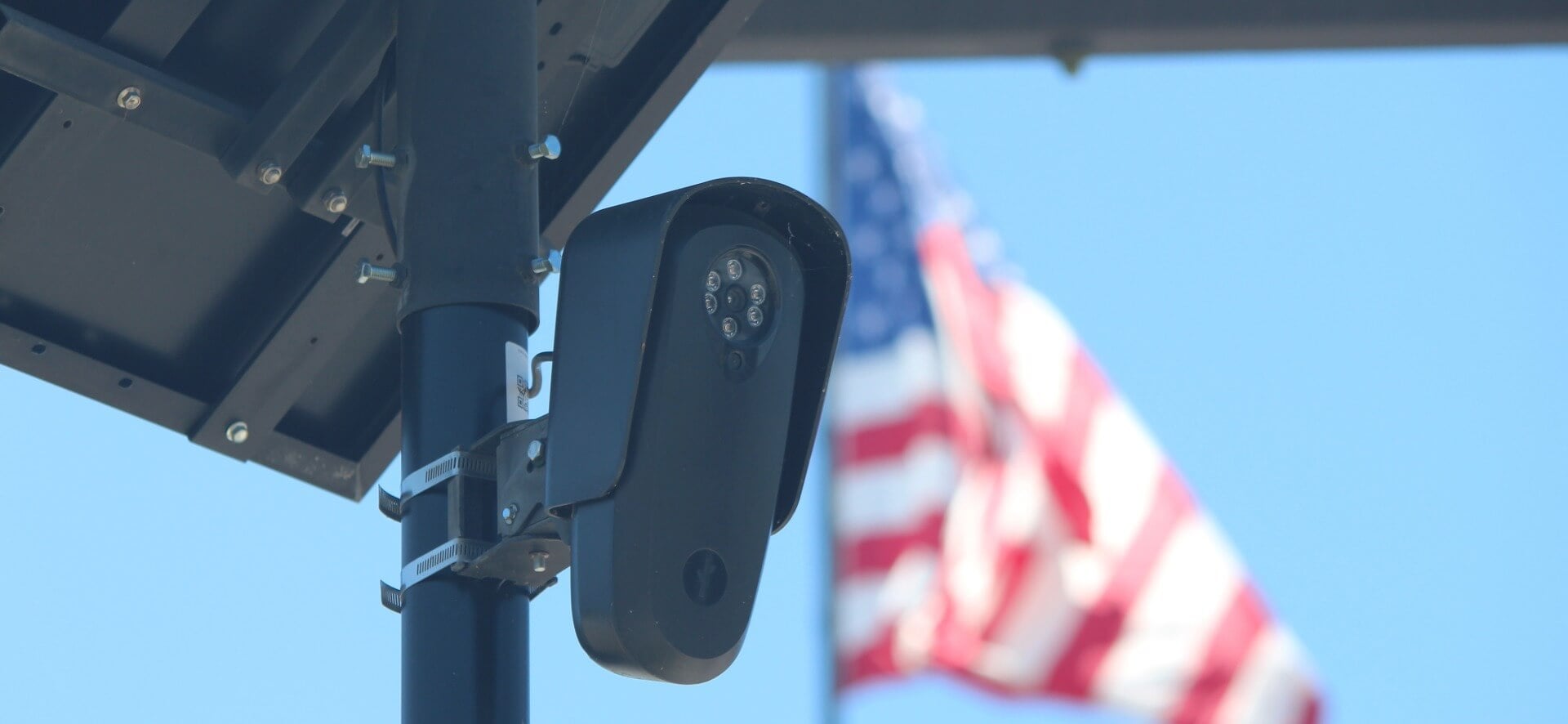
Flock Safety is one company that makes automated license plate readers, commonly called ALPRs. These cameras capture passing vehicles and use software to read license plate numbers within seconds.
The underlying technology is not new. Chief Millsaps told us he participated in a Pennsylvania State Police pilot program involving license plate readers in the early 2000s.
Plate-reading technology later became more common on patrol vehicles and in fixed locations. Similar technology also appears in systems people interact with every day, including E-ZPass, toll-by-plate systems, parking facilities, and private security systems.
The important distinction is that a license plate reader is not the same thing as facial recognition or a camera that automatically tells police everything about the person inside a vehicle. At its core, the system starts with the vehicle and its plate.
What Information Does a Flock Camera Actually Record?
The exact information available can depend on the camera system and how an agency configures it. In general, automated license plate reader systems may collect information such as:
- The vehicle’s license plate number
- An image of the vehicle
- The date and time the vehicle passed the camera
- The location of the camera
- Vehicle characteristics that the system is capable of recognizing
That can give investigators useful information about where a particular vehicle appeared at a certain time.
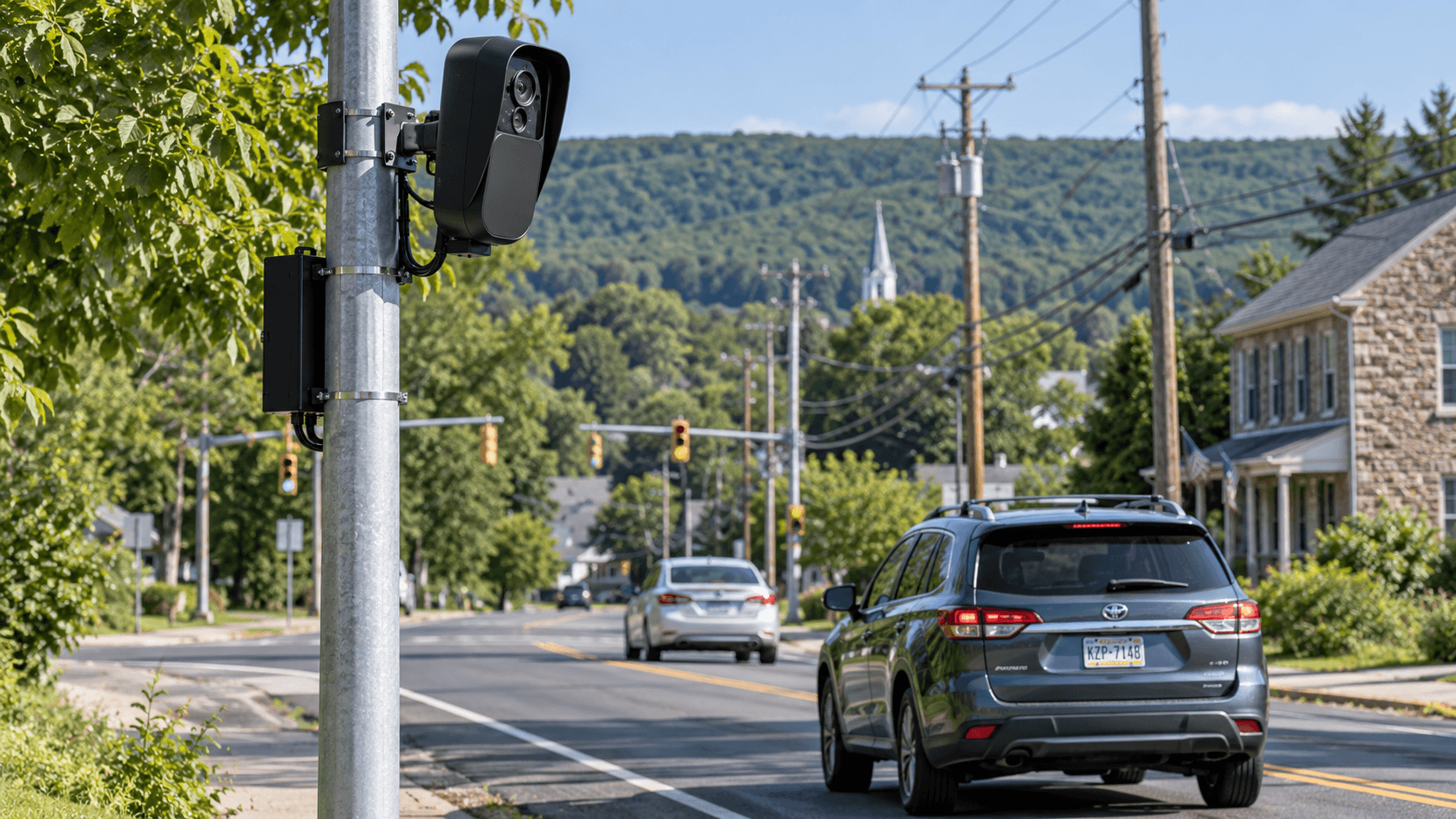
But it is important to understand what that does not necessarily prove. A plate reader does not automatically establish who was driving the vehicle, why the vehicle was there, what happened before or after the camera captured it, or whether the registered owner was even inside the car.
A camera may place a vehicle on a particular street. Investigators still need other evidence to connect that vehicle to a particular person or alleged crime.
How Pennsylvania Police Use License Plate Readers
According to Chief Millsaps, local police can use license plate readers both during patrol and after a crime has already occurred.
A reader mounted on a police cruiser can compare plates against law enforcement information and alert an officer to certain potential issues. Depending on the system and available databases, those alerts may involve:
- Stolen vehicles
- License plates associated with active investigations
- Registration-related issues
- Vehicles entered into law enforcement alert systems
An alert does not necessarily end the investigation. Officers still need to determine whether the information is current and whether the vehicle and plate actually match what the system detected.
Fixed cameras can also help investigators reconstruct what happened after a crime. Chief Millsaps described a case in which stationary camera data helped investigators determine which vehicles traveled along a street shortly after a homicide.
Even then, a plate reader does not simply hand an officer a complete personal profile. Police may need to use authorized law enforcement databases to determine who owns the vehicle and continue the investigation from there.
Why Flock Cameras in Pennsylvania Are Under Scrutiny
The biggest privacy concern is often not that a camera can read a license plate that is already visible on a public road. The larger debate involves what happens to that information afterward.
Critics have raised questions about how long automated license plate reader data should remain available, who should have access to it, when agencies should be allowed to share it, and whether large networks of cameras could allow police or private companies to reconstruct a person’s movements over time.
Pennsylvania lawmakers are actively debating those issues. During the 2025-2026 legislative session, lawmakers introduced multiple bills dealing with automated license plate readers, including proposals that would regulate ALPR systems, restrict certain uses, and establish penalties or privacy protections.
You can review current proposals through the Pennsylvania General Assembly’s automated license plate reader legislation search.
Because this remains an active area of legislation, the rules can change. Anyone dealing with plate reader evidence in a criminal investigation should look at the law that applies at the time of the case rather than relying on an older social media post or news story.
Can Police Look You Up Whenever They Want?
No. Access to law enforcement databases is not supposed to function like a personal search engine for officers.
Chief Millsaps explained that officers accessing Pennsylvania law enforcement systems must have a legitimate law enforcement reason for doing so. Searches can create records that agencies and oversight bodies may review or audit.
That matters because accessing sensitive information for personal reasons can lead to serious employment or criminal consequences.
For someone facing charges, access logs may become important if there is a legitimate question about why an officer searched for a person or vehicle, when the search occurred, or whether the officer followed required procedures.
Can Police Track Your Phone in Pennsylvania?
The device in your pocket can reveal far more about your movements and behavior than a single roadside license plate camera.
Phones and apps can generate location information, account activity, browsing data, communications, photographs, cloud records, and other electronic evidence. That type of information now appears regularly in criminal investigations.
Cell phone evidence can also become important when police are trying to identify who was present at a location. We discuss some of those issues further in our article on eyewitness misidentification and cell phone evidence in Pennsylvania criminal cases.
Phone data can receive significant constitutional protection. In Carpenter v. United States, the U.S. Supreme Court held that the government’s acquisition of historical cell-site location information was a search and that law enforcement generally must obtain a warrant supported by probable cause before acquiring those records.
That does not mean every type of digital information follows exactly the same rule. The type of data, how police obtained it, the length of time involved, and other circumstances can change the legal analysis.
Do You Have a Right to Privacy in Your License Plate?
Generally, drivers have a much weaker privacy interest in a license plate that is openly displayed on a vehicle traveling on a public road.
Courts have generally treated observations of publicly visible license plates differently from searches of private information such as the contents of a phone.
But that does not automatically answer every question involving automated plate reader technology.
There is a difference between an officer seeing a plate while driving behind a vehicle and a large network potentially storing searchable records about where a vehicle appeared over an extended period. Questions involving retention, access, sharing, and large-scale tracking are part of the ongoing legal and legislative debate.
Can Flock Camera Evidence Be Challenged in Court?
Yes. If license plate reader data becomes part of a criminal case, that does not mean the evidence is automatically accurate, complete, or enough to prove the Commonwealth’s case.
An experienced criminal defense attorney may examine several questions when electronic location evidence becomes important.
Those questions can include:
- Did the camera read the correct license plate?
- Did an officer independently verify an automated alert?
- Was the plate associated with the correct vehicle?
- Who had access to the data?
- How long was the information stored?
- Was the database search connected to a legitimate law enforcement purpose?
- Did police need a warrant or court order for any related electronic evidence?
- Can prosecutors actually prove who was driving the vehicle?
- Does the evidence establish anything beyond the vehicle’s location?
Digital evidence can look extremely persuasive because it comes from a computer system. But computers do not eliminate questions about accuracy, interpretation, authentication, procedure, or context.
The defense may also examine whether the Commonwealth can properly introduce a particular record in court. Similar evidentiary questions come up in many criminal cases, which is why understanding rules such as hearsay in Pennsylvania criminal court can matter when prosecutors rely on records, statements, or electronic evidence.
A camera showing a vehicle on a road at 10:15 p.m. may establish that the vehicle passed a camera at approximately that time. It does not necessarily establish who drove it, where the occupants were going, or what anyone inside the vehicle was doing.
Does a Flock Camera Identify the Driver?
Not by itself.
A license plate is associated with a vehicle registration. That is not the same thing as identifying the person behind the wheel at a particular moment.
Police may use other evidence to try to establish who was driving, including officer observations, surveillance video, witness testimony, phone data, statements, photographs, or other records.
That distinction can become extremely important in a criminal case. Showing that a vehicle was somewhere and proving that a specific defendant was driving it are two different things.
Are Police Following You After an Arrest?
In most ordinary criminal cases, police are not assigning officers to continuously follow someone after an arrest.
Chief Millsaps explained that long-term physical surveillance typically requires significant resources and is generally associated with more serious or ongoing investigations.
Sometimes there is a simpler explanation for repeated police attention. For example, officers may recognize a vehicle connected with someone they know has a suspended license or an outstanding issue.
That does not mean surveillance never happens. It means the idea that every person who has been arrested is automatically placed under around-the-clock monitoring does not reflect how most local investigations work.
Frequently Asked Questions
Are Flock cameras legal in Pennsylvania?
Automated license plate readers are currently used by law enforcement agencies in Pennsylvania. However, Pennsylvania lawmakers are considering legislation that could regulate, restrict, or otherwise change how ALPR systems may be used. Because legislation can change, anyone dealing with a current criminal case should speak with an attorney about the law in effect at that time.
What can a Flock camera see?
A Flock camera can capture information associated with a passing vehicle, including its license plate, an image of the vehicle, the location of the camera, and the time the vehicle passed. Depending on the system, additional vehicle characteristics may also be recorded.
Can Flock cameras tell who is driving?
Not necessarily. A license plate reader identifies a vehicle and its plate. The registered owner of a vehicle is not automatically the person who was driving when the camera captured it. Police generally need additional evidence to establish the driver’s identity.
Do I have a right to privacy in my license plate number?
Generally, courts have found little expectation of privacy in a license plate that anyone can observe while a vehicle travels on a public road. Broader questions about storing, searching, sharing, and combining large amounts of location data can raise different legal issues.
How long do Flock cameras keep license plate data?
Retention periods can depend on the particular system, agency policies, contracts, and applicable law. Data retention is also one of the issues lawmakers and privacy advocates have raised when discussing regulation of automated license plate readers.
Can police look up my information for no reason?
Law enforcement database access generally requires an authorized law enforcement purpose. Searches can be logged and subject to review or auditing. Improper use of protected law enforcement systems can carry serious consequences.
Can license plate reader evidence be used against me in a criminal case?
Yes. Prosecutors may use license plate reader information as part of a criminal case. However, the defense can still examine the accuracy of the plate read, how police obtained and verified the information, who accessed the data, and what the evidence actually proves.
Can Flock camera evidence be wrong?
Automated systems are not automatically infallible. A defense attorney may investigate whether the plate was read correctly, whether the image matches the correct vehicle, whether an alert was current, and whether officers independently confirmed important information before acting on it.
Can police track my phone without a warrant?
The answer depends on the type of information police want and how they obtain it. The U.S. Supreme Court has held that police generally need a warrant to obtain historical cell-site location information. Different forms of electronic evidence can involve different legal rules and exceptions.
Are police following me after my arrest?
Usually not. Long-term surveillance takes significant time and resources and is generally reserved for investigations where police believe continued monitoring is necessary. Being stopped or encountering police more than once does not automatically mean officers are actively tracking your movements.
Talk to Former Prosecutors Who Know How These Cases Are Built
If camera footage, license plate reader data, cell phone records, or other electronic evidence is part of the case against you, the details matter.
Kearney Law’s attorneys have worked on both sides of criminal cases. That experience helps our team understand how prosecutors attempt to connect electronic records, police observations, witness statements, and other evidence into a larger case.
If you need a criminal defense lawyer in York, PA, or representation elsewhere in Central Pennsylvania, our attorneys can review the evidence and explain the options available to you.
Kearney Law represents clients in York, Adams, Lancaster, Cumberland, Dauphin, Franklin, and surrounding Central Pennsylvania counties.
Schedule a free consultation with Kearney Law or call 717-668-8159.